
Why Jute and Cotton Are the Best Materials for a Beach Bags Manufacturer to Use

A Phone Call That Changed a Resort’s Beach Season A couple of years back I got a call from a resort manager in the Maldives who was genuinely fed up. He’d ordered thousands of polyester beach bags the season before. Within weeks, guests were handing them back — prints peeling off, the fabric stiff and brittle from the sun, sand clinging to everything like glitter you can’t ever clean. The bags screamed cheap, and his resort’s reputation took a small hit. He needed something that wouldn’t embarrass him by the time the first guests checked out. We talked for a good half hour. I told him, “Drop the synthetics. Go with jute and cotton.” He was wary, asked a dozen things, then eventually placed a trial order. A year later, he became a regular. That conversation didn’t surprise me. In twenty years as a Beach Bags Manufacturer, we’ve had versions of it hundreds of times. Two Decades on the Factory Floor You don’t last this long by hoping things work out. Our factory in Kolkata gets unbearably humid in the summer — and honestly, that’s a brilliant testing ground for beach bag materials. If a fabric can survive our warehouse in July, it’ll handle a day at the shore. We ship about 48 million bags a year to 64 countries. After that kind of volume, you learn very quickly which materials make clients call you again and which ones fill up the complaint inbox. Jute and cotton? They win. Every single time. Why Jute Stands Up to Sand and Salt The reason isn’t flashy. People visiting a beach don’t want to care about their bags, they put wet towels, sunscreens, half eaten chips and they want to believe their bag will not smell bad. They just want to shake the bag afterward and carry on. Jute and cotton handle that neglect effortlessly. Let’s talk jute first. Jute is rough in the best possible way. The fibres have a natural grip, a texture that sand simply won’t stick to. A couple of sharp shakes and the sand’s gone — no need to beat the bag against a wall. That single property saves our clients more goodwill than any marketing campaign could. Jute also breathes. You know that damp, trapped smell you get when a wet swimsuit stays inside a lined synthetic tote for a few hours? Doesn’t happen with jute. The air moves through and the bag stays fresh enough. And here’s the part that actually matters for heavy packers: jute is strong. We’ve stuffed beach bags with over eight kilos of wet towels, water bottles, and books, and the handles have held firm. The secret is reinforced stitching — we triple-stitch stress points as standard — but the fibre itself does a lot of the heavy lifting. Cotton: The Washable, Print-Friendly Choice Now cotton. Cotton’s softer, lighter, and far more forgiving when it comes to cleaning. Families with small kids tend to go for cotton because the whole bag can just get thrown in the washing machine after a sandy, sticky outing. Cotton also soaks up print beautifully. We use water-based inks, and the detail stays sharp through repeat washes. I remember a job for a Mediterranean resort chain a few summers ago — a hundred thousand cotton beach bags with a delicate, full-colour illustration. They reordered the exact same design the following summer because the bags still looked new. That kind of repeat business tells you more than any spec sheet. We often get asked to compare the two materials directly. Here is a straightforward look, built on actual production data and feedback from millions of bags: What Matters Jute Beach Bags Cotton Beach Bags Strength when loaded Handles 8-10 kg easily without stretching Strong enough for typical beach day items, lighter by nature Sand behaviour Shakes off quickly because of the weave Holds a bit more sand but still far better than synthetics Feel on the skin Textured, sturdy, gives a rustic vibe Soft, comfortable for all-day carry Print quality Works best with bold screen-printed designs Excellent for fine details and full-colour prints After a day at the beach Just air it out, spot clean if needed Toss it in the washing machine What happens after disposal Biodegrades completely Biodegrades completely, organic cotton breaks down even cleaner The Price Question: Why Natural Fibres Pay Off I get asked often if natural fibres cost more. Yes, they can be a bit pricier per unit compared to the cheapest non-woven polypropylene. But if you hand a guest a bag that feels nice to carry and lasts the whole holiday, they’ll probably take it home and use it at the farmer’s market or the gym. That’s free advertising and zero landfill regret. We’ve seen resorts put a small deposit on our bags and receive almost zero complaints because the bag actually felt worth keeping. Try that with a synthetic bag that looks exhausted after two afternoons. The Environmental Side No One Can Ignore Anymore Something else has shifted in the last few years: the environmental conversation isn’t just nice packaging anymore. The United Nations Environment Programme reports that 85% of marine litter is plastic, and a huge slice comes from coastal tourism. Resort chains and event planners are under real pressure to ditch single-use plastics. When you pick a Beach Bags Manufacturer that works with jute and organic cotton, you get a bag that biodegrades fully at the end of its life — no microplastics, no toxic leftovers. That’s not spin. It’s how these fibres behave in soil and moisture over a year or two. We’ve seen it happen on our own compost test piles. Colours That Survive the Sun I’d rather overshare than get a panicked phone call in August. So I’ll mention this: we test every colour under direct sun, because beach bags sit in it for hours. AZO-free dyes, UV-resistant inks — all standard for us. If your company reports on ESG metrics, we can trace materials
Why HR Departments Love Working with a Corporate Jute Bags Manufacturer for Onboarding
There is something about that first day, isn’t there? You walk in — or these days, maybe you log in — and there is this little welcome pack sitting there. I have seen people’s faces change over something as simple as a bag. A real bag. Not the plastic kind that rips before Friday. HR folks have caught on to this in a big way. Over the years, many of them have started calling us, a Corporate Jute Bags Manufacturer, to put together onboarding kits that actually last. At Anges Bags, we make a lot of bags. North of 48 million every year, shipping out to more than 64 countries. A fair number of those end up with brand-new employees at companies you would recognise. When HR managers sit down with us, it rarely stays about the bag for long. It becomes about what that first impression should feel like. So, let’s get through what we witnessed, if it worked and why the pairing is perfect. The slow, steady turn toward welcome kits that don’t harm the planet A few years ago, I’d watch companies stuff onboarding kits with things destined for the bin. That script has flipped. Deloitte published a 2024 Global Human Capital Trends https://www2.deloitte.com/us/en/insights/focus/human-capital-trends.html piece that made a point — when sustainability seeps into the employee experience, engagement and retention improve. HR leaders read that and ask, where do we begin? Often, the welcome bag is the easiest, most visible starting point. Jute works because it feels honest. Earthy, warm. You drop in a notebook, a reusable bottle, maybe the handbook, and suddenly it’s not a bundle of freebies. It says something without shouting. I’ve had more than one HR manager tell me the bag does half the talking about company values before orientation even kicks off. Why new hires actually keep these bags Truth is, not every bag is cut out for this. HR teams need something that can take a beating. Someone will jam a laptop, gym clothes, and a lunch box in there. We usually nudge them toward laminated jute. It can keep its shape intact, can sustain a small amount of drizzle, and do not look worn out after a week.The other bit? The bag sticks around. Once I saw a person carrying one of our bags with the particular company logo. He has been using it for two years. Still hauling it. That is the kind of brand exposure you cannot pay for. A solid manufacturer helps HR choose the right weight, handle stitching, finish — so that bag earns a spot in someone’s daily rhythm. A real project that stuck with me A while back, a global IT firm got in touch. They were onboarding over 2,000 grads in waves. Their old plastic kits were, to put it kindly, forgettable. The HR director said half the bags didn’t survive a month. We worked with their team, designed a minimal jute backpack — foldable, light, just their purpose statement printed on it. Nothing overdone. Six months later they shared some numbers. Bag usage among new hires was up nearly 40% versus the old plastic stuff. That made the HR team look smart, and it reaffirmed something for us: listening beats fancy design every time. It wasn’t complicated. We just heard what their people would actually carry. Custom touches that feel personal Every company’s culture is its own beast. A startup might want bright colours and a huge logo. A law firm? Probably muted tones, a small debossed crest. We’ve done both. Jute takes screen printing, digital, embroidery surprisingly well, so there’s room to get creative without the budget spiraling. Beyond visuals, you can mess with the function. Padded laptop sleeve, inner pocket, zipper, convertible handles from a Corporate Jute Bags Manufacture. I’ve seen HR teams come to us with a rough sketch on a napkin, and we turn it into a sample. That back-and-forth gives the final bag a sense of belonging — not like it was picked from a catalogue. A bag that lives a life, not dies in a drawer The best feedback we hear: “I’ve had mine for three years.” Jute is just tough. We pull handles and seams in the factory until they fail, so we know the limits. When someone visits a market on his off duty, the logo becomes also part of his personal life which indicates the profession he belongs to. THis is a silent swag which is not hidden during his off duty. Keeping the budget sensible Onboarding budgets rarely have much slack. Cutting out middlemen helps. We price from the factory floor, so per-unit costs stay reasonable even for big orders. A well-made jute bag that lasts two years costs less per impression than a cheap bag swapped out every quarter. The HR folks who run the numbers usually end up pitching it as a clever spend, not a fluffy extra. Deliveries that don’t give HR a headache Onboarding schedules are tight. Kits have to be there on the day, whether at the office or on someone’s doorstep. We’ve shipped to corporate HQs, regional hubs, and straight to home addresses. I remember an HR coordinator onboarding a fully remote cohort during a lockdown. We sent kits to 400 different addresses in a single week, each trackable. She later said it was one fewer thing to panic about. That’s the goal, really. Trust is non-negotiable HR teams take on real risk when they pick a supplier. If a factory has shady practices or can’t back up claims, the company’s name gets dirty. We’ve always been open about our certifications — ISO 9001:2015, SA8000, Sedex member. These are not decorations. They mean auditors show up, check things, and we hand over paperwork when compliance asks. That kind of transparency can shave weeks off the vendor approval timeline. I’ve seen it happen. Tying it to bigger sustainability goals Lots of companies now have public green targets. Onboarding kits can contribute a little. Jute is biodegradable,
Why Trade Shows Are Moving Toward Eco-Friendly Promotional Bags Manufacturer Partners
I’ve been in this bag game longer than I care to admit, and a little scene from a Frankfurt trade show still pops into my head when people ask why things are changing. I was leaning against a pillar near a client’s booth, sipping something lukewarm, just watching the tide of people. Across the way, an exhibitor was enthusiastically pressing these ultra-thin plastic drawstring bags into everyone’s hands. You know the ones — they crinkle, they sweat, and if you drop a heavy catalogue plus a water bottle inside, the seams start screaming. One guy took a bag, loaded it up, took about seven steps, and rip. Stuff all over the floor. He didn’t even look back. Just scooped up his things and vanished into the crowd. That company had spent who knows how much on the booth, the travel, the lights… and a bag worth maybe five cents killed whatever impression they’d made. That moment sort of planted a seed, even though I already worked in sustainable bags. It made me realize the freebie bag isn’t a minor detail. It’s often the first physical thing someone associates with your brand at a show. And these days, with the way attitudes have shifted, that first touch had better feel right. We’ve been seeing it clearly at Anges Bags. Buyers who would’ve called us five years ago just to get the rock-bottom price are now leading with a whole different set of questions. They’re looking for an eco-friendly promotional bags manufacturer that doesn’t just talk a nice game, but can actually prove the bag is what it claims to be, can deliver on time, and can handle quantities that sometimes make logistics people sweat. We’re not a tiny operation — over 48 million bags a year, across 64-plus countries — and even we have to stay on our toes. I’m not sharing theory here. This is stuff I’ve picked up on the floor, on the phone with stressed event managers, and occasionally standing ankle-deep in sample swatches. The Growing Demand for Sustainability at Trade Shows I remember when the brief from most clients was basically “cheapest tote, logo in one color, send it.” That world’s crumbling. Organizers have started pushing, not just gently nudging. UFI, the exhibitions industry body, has data showing that a solid majority of organizers now run some kind of sustainability programme, and a lot of them are turning that into requirements for exhibitors. (Source: [UFI Sustainable Development Report](https://www.ufi.org/industry-resources/sustainability/ )) I’ve heard directly from exhibition managers — one lady in particular who runs a big tech show — that her team actually walks the floor and notes which booths are handing out single-use plastics. If you’re on that list, you might get a polite, but very pointed, email. And honestly, attendees are paying way more attention. They’ll pick the bag up, turn it over, squint at the little label inside. If they’re talking to your sales guy about innovation and responsibility, and the bag in their hand screams disposable, they feel that disconnect. Sometimes they even ask, “Is this recycled?” and you better have an answer ready. Large venues have started banning single-use plastic bags outright too. So if you’re doing a show circuit, finding a dependable promotional bags manufacturer that breathes this sustainability stuff isn’t some optional add-on. It’s just part of getting your booth together. What Makes a Promotional Bag Eco-Friendly? “Eco-friendly” gets slapped on everything, and I’ve seen enough to be a little suspicious when there’s no paperwork behind it. Over time, I’ve boiled it down to three things that actually separate a bag worth the label from one that’s just riding the trend. The raw material itself tells a story. Organic cotton has a soft, almost velvety feel that makes people want to keep it. rPET — basically recycled plastic bottles spun into fabric — is lighter, sleek, and easy to print on. Natural jute has that earthy, rustic vibe. And laminated jute, which we make a ton of, adds a layer that handles moisture and rough treatment. For multi-day indoor shows where people are hauling around heavy magazines, laminated jute is a quiet hero. For a luxe product launch, cotton canvas just feels richer. Certifications are the proof part. GOTS for organic cotton, OEKO-TEX for safety. I always tell clients, ask to see the actual certificate. If the supplier stumbles or says they’ll send it later and never does, that’s your cue to leave. We’ve had nothing to hide, so handing over documents is just part of our process. And then the afterlife of the bag. An eco-friendly promotional bag that gets used once and tossed is a fail. A good one lives on. I’ve had clients send me phone snaps of our bags at grocery stores, at yoga class, at a beach, even tied to a motorcycle. That’s reuse happening in the wild. Picking an promotional bags manufacturer means finding someone who talks about these layers without making it sound like a script. Why Trade Shows Are Choosing Sustainable Promotional Bag Partners It’s not just guilt or fear of getting shamed. Some of the savviest event folks I’ve dealt with see this as a quiet brand flex. Brand alignment is a big one. If your whole pitch is about caring for the future, handing over a flimsy plastic sack is like ending a heartfelt speech with a kazoo solo. I worked with a tech company that made a big deal about reducing e-waste. They gave out recycled-material bags at their booth, and attendees actually asked about the bag’s story, which opened the door to talk about their mission. That wouldn’t have happened with a generic throwaway. The sensory thing matters too. A bag that feels substantial, that sits comfortably on your shoulder, that has a bit of texture — people hold onto it. They repurpose it. Every time they do, your logo is riding along. It’s the quietest, cheapest impression you’ll ever buy if you get the quality right. Compliance is
From Seed to Stitch The Real Journey of Our Organic Cotton Bags
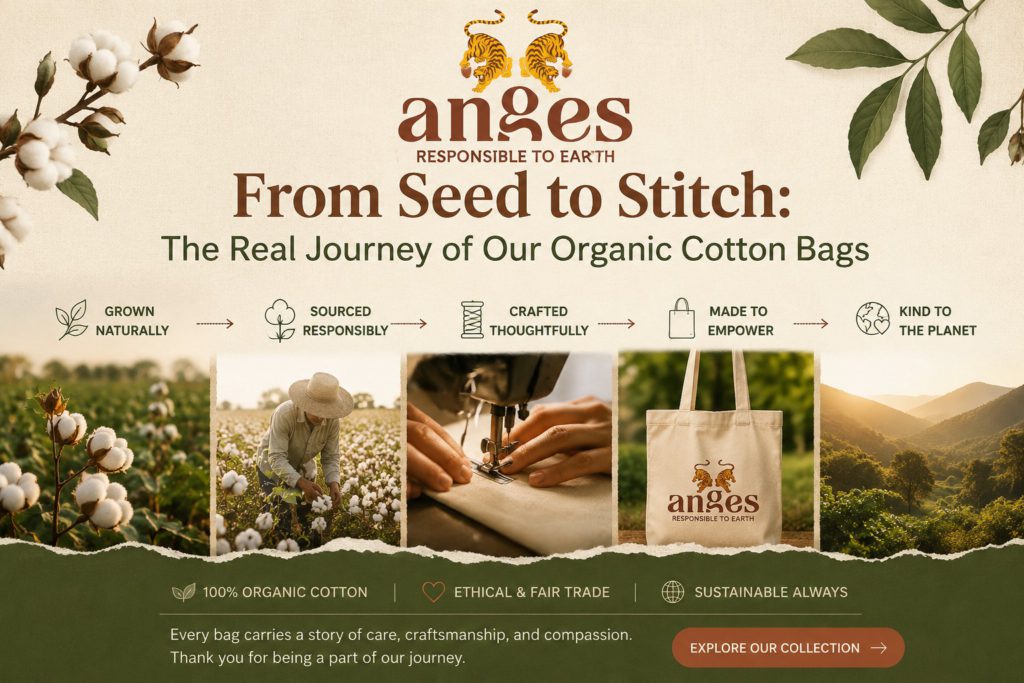
Organic Cotton Bags, funny things really. We all use them. Everywhere. Constantly. But honestly? When’s the last time you actually thought about where yours came from? I didn’t either. Not until I got into this business. That was over twenty years back now. And once you’ve seen the whole thing as a seed becoming something you hold in your hands, it stays with you. Changes how you look at things. It really does. This isn’t going to be one of those polished corporate things. No marketing speak. Just the proper story behind an organic cotton bag. Where it starts. The journey it takes. What it all means. A farmer called Ajit I was in Maharashtra some years ago. Cotton country. Early morning, beautiful light, everything quiet. Went to see one of our farmers. Older fella, name of Ajit. Been doing organic cotton for over thirty years.He didn’t try to impress me with charts or presentations. Just knelt down in his field. Scooped up some dark earth. Hold it out. *”Smell,”* he said. So I did. And I know this sounds odd, but it smelled different. Alive. Rich. Like rain and soil and none of that chemical stuff you get on conventional farms. *”This land,”* he told me, *”has fed my people since my grandfather’s time. I’d never poison it. Not for anything.”* That got me. Still does.Organic farming isn’t easy. It’s tough. Slow. It takes patience. Farmers use compost, not synthetic stuff. They plant other crops next to the cotton keeps the soil happy. Bring in good insects to manage the pests. Rotate fields to let the land rest. It’s all about respect. For the earth. For the future. For those who come after. And here’s the thing: it works. Organic cotton uses something like ninety percent less water than the conventional kind. Cuts greenhouse gases by about half. Keeps nasty chemicals out of our rivers and soil. There’s actual research on this, a sixteen-year study from the Research Institute of Organic Agriculture (FiBL) showed organic farms can yield almost as much cotton as conventional ones. Without wrecking the environment. So that organic cotton bag you’re carrying? That’s not just a product. That’s Ajit’s life’s work. Thousands of litres of saved water. A choice that genuinely means something. What happens after harvest When the cotton’s ready, they pick it by hand. Not because it’s picturesque or whatever machines just damage the fibres. Makes the yarn weaker. So our farmers take their time. Do it right. Preserve the quality. Then comes ginning. That’s separating the fluffy cotton from the seeds. And this is where we get proper strict. Every batch gets tracked. Every bale has to be certified organic. If it’s not? Doesn’t get anywhere near our factory. End of. From there, the cotton goes off to spinning mills. Gets carded, combed, twisted into yarn. Most people don’t realise how much this matters, the quality here decides whether your bag lasts for years or falls apart in months. We only work with mills that know organic fibres. That treat them properly. No cutting corners. Then the yarn gets woven into fabric. Different weaves for different purposes. Tighter for heavy stuff. Looser for everyday use. Our team spends ages figuring out what works best for each bag. The workshop, my favourite bit This part I love. The Kolkata workshop. Where fabric becomes an actual bag. Designers sketching, cutters laying out material, master tailors—some with us over a decade—guiding everything through the machines. I watched Meera work the other week. Twelve years she’s been with us. She showed me how she reinforces handles with double-stitching. *”Most brands skip this,”* she said, running her fingers along the seam. *”We never do. Never have.”* And she’s right. Our organic cotton bags aren’t churned out by machines somewhere anonymous. Real people make them. People who take pride in what they do. Who check every single seam. Every handle. Every tiny detail. We’re carbon-zero too. Offset all our energy use. Not because it looks good. Because it’s the right thing. Simple as. People are finally getting it The organic cotton market hit over two billion in 2025. Experts reckon it’ll cross fifty billion by 2034. Over a hundred major fashion brands have pledged to switch to sustainable cotton. But what’s really driving this? Ordinary people. Folk who pause before grabbing plastic and wonder if there’s a better way. That’s why our cotton bags exist. Because enough people asked. We’ve been at this since 2003. Ship to over sixty countries. Over forty-eight million bags a year. But honestly? None of that matters as much as knowing we’ve always done things right. Faqs Is organic cotton actually better? Way better. Less water, way fewer emissions, no toxic chemicals. Not even close. You certify your cotton? Yes. GOTS standards. Full traceability. How long does a bag last? Years, with decent care. Built to last. Custom orders? Printing, embroidery, custom sizing, we do it. Just contact us through the site. Where can I see what you’ve got? Right here: (https://www.angesbags.com/ ) If you’ve read all this, thank you. Means you actually care. And honestly, that matters. Next time you grab an organic cotton bag, pause. Think about the seed. The farmer. The spinner. The weaver. The tailor. All those hours. All that work. It’s not just a bag. It’s something better. By the Product Development Team, Anges BagWe’re the Product Development Team at Anges Bags. Textile engineering, sustainable sourcing, quality assurance, that’s us. We visit farms. Inspect production lines. Test our bags ourselves. Every single organic cotton bag we make has been through someone’s hands on our team. Not because we have to. Because we genuinely care about what we put out therePublished: July 3, 2026
Sustainable Sophistication: The Future of the Corporate Jute Bags Manufacturer
Plastic has finally started to stink in the corporate world Not the smell of it. The reputation. Walk into any boardroom or trade show floor and the giveaway pile is a graveyard of cheap ballpoints, keychains that break before the conference ends, and shiny totes that nobody wants to be seen carrying outside the venue. That whole model is dying. And the thing pushing it off the cliff is something that looks like it belongs in a farmer’s market but feels like it belongs in a boutique hotel lobby. A jute bag. Except not the rough scratchy one you remember from the 1990s. Something else entirely. What even is a corporate jute bag supposed to mean right now Right now it means the company giving it to you actually read the memo. The memo that said regulators are tightening, plastic bans are spreading, and the next generation of talent and clients isn’t asking whether you have an ESG policy. They’re checking if your merch matches it. A Corporate Jute Bags Manufacturer isn’t just pushing out a natural-fiber container anymore. The gig has changed. It’s about manufacturing proof. Proof that the brand in question is willing to spend money on something that rots safely into soil instead of outliving the recipient in a landfill. That’s a heavy burden for a bag. But jute can carry it. Literally and metaphorically. Why jute doesn’t need a greenwashing filter This is the part that procurement officers like. Jute is a rain-fed crop. No irrigation drama. Minimal pesticides. It sucks carbon out of the air faster than most trees and when its life as a conference bag ends it breaks down completely. A Jute Bags Manufacturer doesn’t have to invent a sustainability story. It just has to tell the one that already exists in the fiber. That’s rare. Cotton needs enormous water. Recycled polyester still sheds microplastics. Jute basically walks in and says, “I’m fine. No fine print needed.” And because the story is so clean, the bag becomes a quiet handshake. No screaming logos. No neon colors trying to be memorable. Just a piece of material that feels deliberate. The rough fiber that learned to dress up The old headache about jute was the texture. Too coarse. Shedding fibers on a black suit. Nobody wants to reach into a gift bag and pull out a handful of slivers. That’s changed. Modern finishing has turned jute fabric into something that can hold its own next to canvas and linen. A jute bag production house now works with softened weaves, laminated interiors, precision stitching. The bag can be dyed a deep charcoal or navy that doesn’t look like a school project. Handles are reinforced. Sometimes there’s leather trim. Sometimes a minimalist debossed logo that you notice on the third glance. That’s the sophistication part. It doesn’t shout. It sits on a meeting room chair and just looks right. Why a cheap gift now costs more than an expensive one Nobody says it out loud at the procurement meeting but it’s true. A plastic folder with a sticker on it gets thrown away. A poorly made jute bag might last six months. But a good one, a bag from a Jute Bags Manufacturer that actually understands stitching and load-bearing and how a strap feels on a shoulder after two hours of walking an expo hall, that bag stays. It becomes the thing the recipient uses to carry their lunch. Or their gym kit. Or their laptop to a coworking space. Every day that bag is in public, it’s advertising. And not the kind that begs for attention. The kind that says, “This company gave me something I didn’t want to bin.” That’s the return on investment no spreadsheet captures properly. Long-haul brand visibility wrapped in a fiber that degrades gracefully. The logo that whispers instead of yells Luxury went quiet. The branding trend that matters right now isn’t about being bigger. It’s about being subtler. A tonal print on a natural jute surface. A small leather patch. An inside label with a message about reforestation or farmer welfare. A Corporate Manufacturer that gets this is essentially making editorial merchandise. Stuff that belongs in a magazine spread about conscious living, not in a bottom drawer with dried-out highlighters. Anges Bags sits in that space. Not as a mass producer of generic sacks but as a specialist that can execute a design language a brand manager actually feels proud to put in a welcome kit. When the bag looks like something you’d buy in a design store, the recipient forgets it was corporate merch. That mental shift is priceless. Supply chains with receipts not just promises There’s a quiet panic happening in corporate responsibility departments. New regulations are demanding traceability. “Sustainably made” without evidence is becoming a liability. A jute bags manufacturer with a transparent chain from farm to finished product solves that headache. The fiber comes from a place. The weaving happens somewhere. The stitching is done under conditions that can be audited. That string of proof is now more valuable than the bag itself for a company preparing its annual sustainability report. It turns a simple promotional item into a compliance asset. Not many swag items can do that. A plastic water bottle certainly can’t. What happens when the bag gets tired Everything gets tired eventually. The difference with jute is that tired doesn’t mean toxic. It goes into the ground and improves soil structure as it decomposes. A product whose end-of-life actually feeds something instead of poisoning something. That’s the circular logic a Manufacturer bakes into every unit. It’s a conversation ender in the best way. When a board member asks, “And what happens after use?” the answer isn’t a mumble. It’s a clear biological loop. The dull edge of the competition Everyone else is still pushing polyester. Or cotton blends that guzzled water in drought-prone regions. Or bamboo that required chemical processing to become fabric. Those products are going to hit walls. Not just
Exporting Summer: How a Beach Bags Manufacturer Supplies Global Resorts

It is easy to overlook the objects that travel with us. A guest walks out of a room, picks up a towel, drops a few things into a bag, and heads toward the water. The bag is part of the motion, not the focus. Yet for the people who make it, nothing about it is incidental. A Beach bags manufacturer works within a pattern that has little to do with one place or one season. Summer, in this line of work, does not arrive—it shifts. The season does not end. It relocates. What appears seasonal from a traveller’s point of view is continuous from a manufacturer’s side. As one region slows, another prepares. Mediterranean resorts taper off; Southeast Asian destinations gain momentum. A lull in one market is often matched by activity elsewhere. This creates a steady line of demand rather than a surge. Resorts tend to order in measured quantities, adjusting to occupancy and wear. A Beach bags manufacturer has to remain aligned with that movement—producing enough to meet demand, without building unnecessary stock. Function settles the design early There is very little room for excess in this category. These bags are used quickly, often without care, and returned just as quickly. That cycle leaves little tolerance for fragile construction. So the design is shaped early by use. Handles must hold weight without cutting into the hand. Fabric needs to manage dampness without becoming heavy. Open formats remain common because they suit the pace of resort life. At Anges Bags, the approach tends to stay close to these basics. Adjustments are made where needed—reinforcing a seam, refining the balance—but the structure remains familiar. It is not about standing out; it is about holding up. The journey before use matters just as much By the time a bag reaches a resort, it has already been through several stages—packing, transit, storage. Each stage tests the material differently. Natural fibres, when handled with care, tend to move through this process without much strain. They allow air to circulate, which helps in coastal climates, and they adjust to storage conditions without becoming rigid. There is also a noticeable shift in how buyers evaluate such products. Insights shared by The International Trade Administration suggest that procurement decisions in hospitality are gradually factoring in sourcing and material impact, particularly for items that guests handle directly. Timing carries its own pressure In export, a delay is rarely abstract. It shows up in missing stock at a property, often during active occupancy. Unlike retail environments, there is little room to hold surplus as a safeguard. A Beach bags manufacturer therefore works as closely with timelines as with materials. Production schedules are tied to shipping windows. Documentation, port handling, and clearance all form part of the process. Even small disruptions can shift delivery dates. Orders repeat, expectations remain fixed Resorts rarely order once and move on. They return, often with similar quantities, expecting the same outcome. This places weight on consistency. Each batch must match the previous one—not approximately, but closely enough that differences are not noticed in daily use. Colour, size, finish—everything must align. Manufacturers such as Anges Bags tend to treat this as a baseline requirement rather than an added feature. Branding is present, but restrained Customisation is part of the process, though rarely dominant. A logo may be added, a colour adjusted, a detail refined to match the property’s identity. The aim is integration, not emphasis. For a Beach bags manufacturer, this means working within limits—allowing the product to reflect the resort without overpowering it. What repetition reveals over time Products used repeatedly tend to expose their weaknesses. A handle that strains under weight, stitching that loosens, fabric that holds moisture—these details surface gradually. Manufacturers who observe these patterns tend to refine their work in small steps. Changes are incremental, often unnoticed at first, but they improve how the product performs across repeated use. The part that rarely gets mentioned Flexibility plays a larger role than it appears. These bags are expected to adapt—to different contents, to shifting use, to the limited space of packed luggage. Cotton and similar materials allow that adjustment. They expand when needed, fold away when not in use, and fit into spaces that rigid forms cannot. It is a quiet advantage, but a practical one. Closing note From the outside, it remains a simple object—picked up, used, set aside. From the inside, the process is continuous. Demand moves, production follows, and the product adjusts along the way. For a Beach bags manufacturer, exporting summer is not about chasing a season. It is about keeping pace with it—wherever it happens to be at any given time.
How to Choose the Right Jute Bag Manufacturer Company for Your Global Business
There is a quiet shift underway in how businesses think about packaging. What once served as a simple utility has become part of the brand itself. Jute bags sit right in the middle of that shift—practical, recognisable, and increasingly expected in global markets. Yet the real challenge is not in choosing jute. It is in choosing the right jute bag manufacturer Company to support that decision over time. Start With Clarity, Not Catalogues It is tempting to begin with samples and price lists. Most buyers do. But without a clear internal brief, comparisons tend to blur. Pause and define a few things first: What volume do you realistically expect to move in a year?Will your bags carry branding, or remain plain?Are you selling domestically, or exporting to regions with stricter compliance? These answers shape the kind of jute bag manufacturer Company you should even be speaking to. Without them, every option starts to look equally suitable—which rarely ends well. Production Strength Is Often Underestimated A polished sample can be misleading. It reflects what a manufacturer can produce, not always what they can sustain. Look beyond the surface: India’s jute sector has seen steady export demand, as noted in . That growth has brought both capable suppliers and overstretched ones into the same space. Distinguishing between them takes a closer look than most buyers expect. Quality Lives in the Details At a glance, many jute bags appear similar. The difference reveals itself with use. Check the small things: Stitching should feel tight and consistent, not rushed.Handles must hold weight without strain.Printing, if required, should not fade or bleed.Edges and finishing should not fray within weeks. A single weak batch can undo months of brand-building, especially in export markets where replacement is not immediate. Design Is No Longer Optional Plain jute bags still have their place. But in most retail settings, design carries weight. A capable manufacturer should be able to adapt—not just produce. That includes: Some suppliers simply follow instructions. Others engage with them. The difference becomes clearer over repeated orders. Compliance Is Where Many Deals Falter This part rarely gets attention early on, yet it causes the most friction later. If your business crosses borders, your manufacturer must understand: Without this, delays creep in. Shipments get held. Costs rise quietly. Communication Tells You More Than Brochures Early conversations reveal a lot. Not through what is promised, but how it is explained. Notice: Do they answer directly, or avoid specifics?Are timelines stated clearly, or loosely?Do they acknowledge constraints when asked? A dependable partner does not wait for problems to appear before speaking up. That habit alone can save considerable time. Pricing Needs Context Low pricing can look attractive at first glance. It often hides trade-offs. Instead of asking, “Who is cheapest?”, it helps to ask: What am I actually getting for this cost?Will the quality remain stable across orders?Is there room to scale without sudden price changes? Consistency tends to matter more than marginal savings. A Practical Fit Over a Perfect One There is no single “best” manufacturer in absolute terms. There are only those that fit your way of working. Anges Bags, for example, positions itself as a steady production partner with attention to export readiness and consistent quality. For businesses aiming to build continuity rather than switch vendors frequently, that kind of alignment becomes useful. Closing Note Choosing a jute bag manufacturer Company is less about making a quick decision and more about setting a direction. The right choice supports growth quietly in the background. The wrong one keeps demanding attention. If the basics, clarity, capability, quality, and communication—are in place, the rest tends to follow.
Stylish, Responsible, and Everywhere: How organic cotton bags Are Shaping Eco-Youth Culture

Stand near a college gate for ten minutes. Watch people as they pass. You will begin to notice something small, almost easy to miss. Fewer plastic bags. More fabric ones—creased, reused, sometimes printed, sometimes plain. No one is drawing attention to it. That is the point. The spread of organic cotton bags has not arrived with noise. It has settled in, slowly, until it began to feel ordinary. A Change That Slipped Into Routine Not long ago, carrying a reusable bag still felt deliberate. You had to remember it, carry it, make space for it. Now it sits folded inside another bag, almost by default. There is, of course, a larger push behind this. Policy changes, awareness drives, restrictions on plastic use. The United Nations Environment Programme has tracked this steady shift across cities:https://www.unep.org/interactives/beat-plastic-pollution/ But rules alone do not explain behaviour. What matters more is repetition. A person uses the same bag for groceries, then for class, then again the next day. After a while, it stops being a decision. How It Found Its Way Into Everyday Style These bags were never meant to be fashionable. Yet, somehow, they slipped into that space. Look around and you will see a certain pattern: They do not compete with what someone is wearing. They sit alongside it. Easy to carry, easy to ignore, yet oddly consistent. Anges Bags seems to understand this balance. The designs do not try too hard, which may be why they hold up over time. The Matter of Daily Use A bag is tested by routine, not by appearance. Books, a laptop, maybe a water bottle—sometimes all together. The weight adds up. Weak stitching shows quickly. Handles start to strain. This is where organic cotton bags hold their ground. The fabric is thick enough to carry load, yet soft enough not to feel harsh. It bends, folds, adapts. It does not insist on structure. And after weeks of use, it changes slightly. Not damaged, just worn in. There is a difference. A Subtle Form of Saying No There is a kind of quiet resistance in this shift. No slogans. No declarations. Just a repeated act—declining a plastic bag, reaching for your own. That small action, done often enough, begins to reshape expectation. Shop counters adjust. Sellers begin to assume you might already have a bag. In that sense, choosing organic cotton bags is less about making a statement and more about stepping away from an older habit. Anges Bags fits into this without pushing itself forward. It offers something usable, which, in this case, is enough. Why They Stay in Circulation Many so-called sustainable products do not last beyond intent. They are bought, used briefly, then forgotten. These tend to stay. Perhaps because: A bag that works in more than one situation is less likely to be replaced. That alone extends its life. Something That Feels Settled Calling this a trend feels slightly off. The movement toward organic cotton bags is tied to larger changes—regulation, environmental pressure, and everyday convenience. None of these are temporary. What has changed, more quietly, is behaviour. People are not thinking about it as much anymore. They just carry the bag. And when something becomes that ordinary, it tends to stay.
How a Jute Bag Manufacturer Company Is Elevating Sustainable Fashion

Sustainable fashion no longer lives only in fabric labels. It shows up in the things carried alongside the outfit. Bags, once secondary, now shape the whole silhouette. That shift did not begin in styling studios. It began in production floors. A jute bag manufacturer Company does more than supply inventory. It decides how raw fiber enters fashion conversation. Whether it stays utilitarian. Or becomes refined enough to sit next to designer clothing without apology. Jute is uncomplicated. It has weight. It has texture. It does not disguise its weave. The question is not whether the material is sustainable. The question is how carefully it is handled. When Roughness Becomes Intentional Designer wardrobes today are restrained. Straight cuts. Controlled layering. Quiet color palettes. A jute bag can either disturb that balance or stabilize it. Too loose, and it collapses. Too decorative, and it feels forced. Too thin, and it cheapens the look. A precise jute bag manufacturer Company adjusts what most people never see. Stitch tension. Panel thickness. Handle drop. Base reinforcement. Those technical decisions determine whether the bag sits cleanly against structured tailoring or pulls it off balance. Texture remains. Disorder does not. Craft Without Decoration There is interest in craft, but not in excess detail. The appetite now is for clarity. Jute already carries variation. The weave speaks. Attempts to over-polish it often strip away its appeal. The stronger approach is restraint—minimal printing, controlled dye, straight seams that do not fight the fabric. A serious jute bag manufacturer Company understands when to stop. Craft becomes evident in alignment, not ornament. The bag does not try to look handmade. It simply does not look careless. Durability Is the Real Sustainability A sustainable accessory that loses structure in months contradicts its own purpose. Base panels matter. Seam density matters. Handle anchoring matters more than logo placement. A bag must distribute weight evenly or it will sag. And once it sags, it rarely recovers. A disciplined jute bag manufacturer Company builds strength where strain accumulates. Double stitching at stress points. Balanced gussets. Controlled cutting to reduce fray. These are quiet reinforcements. They determine whether the bag survives repetition. Green Footprints Are Built, Not Announced Jute’s renewable nature is familiar. The more relevant conversation is what surrounds it. What ink is used. How water is managed. How excess fiber is handled. How packaging is reduced before shipping. A responsible jute bag manufacturer Company does not lean on the word “eco” and stop there. It tightens processes. It tracks waste. It limits chemical load. It adjusts energy use where possible. Sustainability, in practice, becomes a pattern of small controls rather than a single claim. Where Production Shapes Aesthetics When a jute bag appears beside tailored clothing, it signals alignment with reduction, less gloss, less synthetics, less excess. That visual statement begins in the factory as fiber grading influences stiffness. Weave control influences proportion. Print calibration influences restraint. A forward-thinking jute bag manufacturer Company recognizes that manufacturing decisions shape fashion outcomes. The styling comes later.The bag may look simple. The precision behind it is not. Sustainable fashion will continue to elevate objects that hold form, hold function, and hold up over time. Manufacturers who build with that discipline quietly, consistently will define how jute sits within that space.That is where elevation actually begins.
How to Maintain and Reuse Printed Jute Bags So They Look New for Years

A jute bag does not collapse overnight. It gives small signals first. The bottom softens slightly. The sides lean inward. The print loses a touch of sharpness. None of this is dramatic, which is why it often goes unnoticed until the bag looks older than it is. With printed jute bags, longevity depends less on repair and more on interruption—interrupting the habits that cause gradual decline. Jute is tough, but it is not indestructible. It tolerates weight well. It tolerates water poorly. It responds to patience. It resists force. Keep Water Brief, Not Absent Jute cannot be kept entirely away from moisture. That is unrealistic. What matters is duration. Fibres get weakened and shapes become mismatched due to long exposure to dampness. If the bag gets wet, empty it immediately. Stand it upright. Let air pass through it. Avoid hairdryers or heaters. Fast drying can tighten fibers unevenly and affect printed areas. Sunlight should be limited. A short exposure is fine; extended exposure fades ink gradually, often unevenly. Shade with airflow is better than direct heat. Clean With Restraint A spotless bag is not always a healthy bag. Over-cleaning does more damage than light marks ever will. Machine washing is not recommended. Even a gentle cycle strains stitching and disturbs print layers. Instead, isolate the stain. Dampen a cloth lightly. Press against the area. Lift, do not rub. If the mark remains faintly visible, consider leaving it. Slight wear reads as use, not neglect. When caring for printed jute bags, the printed section deserves less contact than the rest of the fabric. Ink sits on the surface; friction works against it. Let the Bag Rest Constant pressure reshapes jute. If the bag is used daily, give it occasional breaks. Alternating between two bags reduces stress on seams and handles. Handles, in particular, reveal age quickly. They bear concentrated tension. Avoid carrying more than the structure was designed to hold. Jute stretches slightly under load. Repeated overloading makes that stretch permanent. Rest restores alignment. It is a simple principle, though rarely practiced. Store With Intention Improper storage does quiet damage. Folding sharply across printed panels encourages cracking. Compressing the bag beneath heavier items encourages distortion. Instead, store it upright or loosely filled with paper. Maintain gentle structure. Keep it in a dry, breathable area. Avoid sealed plastic boxes where humidity can accumulate invisibly. Shape is easier to preserve than to rebuild. Limit Friction, Inside and Out Printed surfaces fade more from abrasion than from age. Dragging the bag across pavement, brushing it repeatedly against textured walls, or placing it under coarse surfaces accelerates wear. Inside the bag, sharp corners and metal edges can press outward, weakening the print from beneath. Use small pouches when carrying hard objects. Even thin lining can reduce direct contact with the jute weave. Over time, prints soften. That is natural. Cracking, however, usually points to friction rather than time. Reuse With Adjustment A bag used for light shopping may not respond well to heavy commuting loads. If its purpose shifts, adjust how it is packed. Liquids should be sealed. Foods that leave residue should be wrapped. Powdered items should never rest directly against the fiber. Before storing the bag for weeks or months, wipe it lightly and ensure complete dryness. Even mild residual moisture can alter the feel of the weave. What Preservation Really Means The goal is not to freeze the bag in its original state. Jute changes with use. The weave softens slightly. The color may mellow. These shifts are not flaws. With steady care, printed jute bags retain clarity and structure well beyond their expected lifespan. The base remains firm. The print remains readable. The handles maintain proportion. Longevity rarely comes from heavy intervention. It comes from small decisions made consistently—less washing, less weight, less friction. Attention early prevents correction later. Over years, that restraint keeps the bag looking considered rather than worn out.