
How to Care for and Repair a Heavy-Duty Cotton Backpack to Extend Its Lifespan for Decades
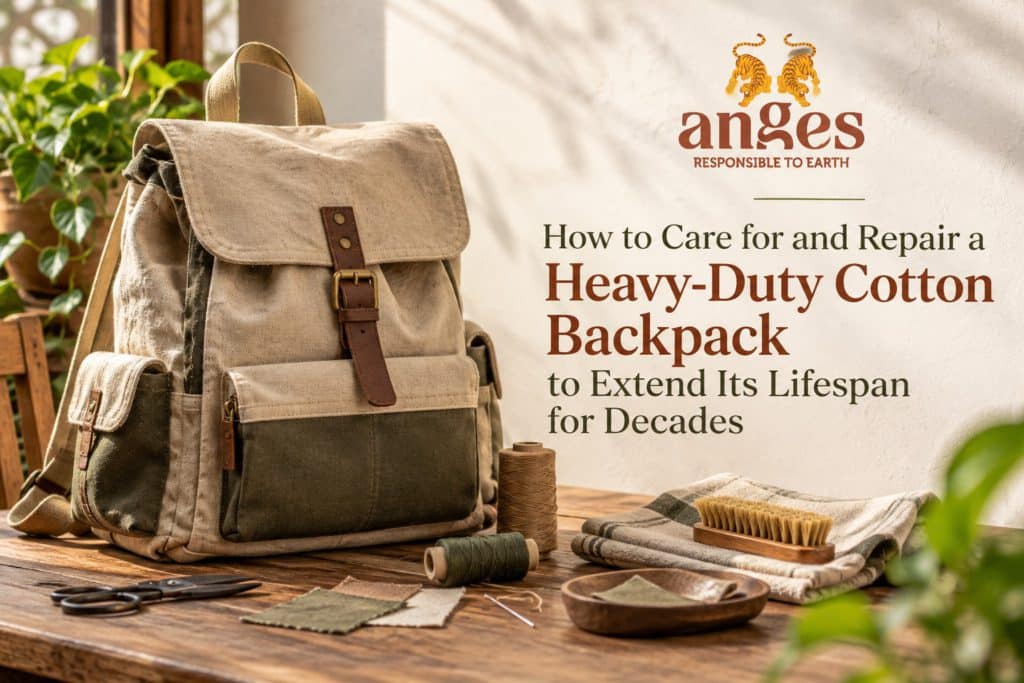
Pick up a backpack that someone has thrown away and look at it closely. Most of the time the canvas is fine. One strap anchor has pulled through half its stitches, one zipper has opened up behind the slider, one bottom corner has worn to the weave. Those three spots, and not the fabric, decided that the bag was finished. That is the real case for a heavy-duty Cotton Backpack. Thick woven cotton lets you get at the damage. You can unpick a seam, lay a patch, swap a slider and re-stitch a strap with a needle, some thread and an evening. Bags with bonded seams and laminated panels rarely allow that, so the same small failure sends them to landfill. Anges makes more than 48 million bags a year for buyers in over 64 countries, and the weak points repeat with a dull regularity from one order to the next. This guide is organised around those weak points, in roughly the order they fail, and around the repairs that hold up under daily use. Where the Load Goes, and Where the Bag Gives Way A loaded backpack pulls down on two strap anchors and the top handle. Everything in the bag hangs from a few centimetres of stitching in each place. The canvas beside that stitching is carrying almost nothing, because the thread takes the strain first. Stress also piles up where a line of stitching ends. The last few needle holes carry a disproportionate share, and that is where a seam usually starts to unzip. This explains why a strap can hold for two years and then go in an afternoon. The first stitches gave up quietly, and each failure handed more load to the next. Bottom corners fail for a different reason. Nothing is being pulled. The bag is simply set down on floors several times a day, and the yarns at the corner lose a fraction of their thickness each time. Zippers wear from the inside out, since grit sits in the slider and polishes it smooth. The fabric itself comes last, usually after years of sun or repeated damp. If you only have time for one habit, make it a monthly tug on each strap near its anchor, then a look along the base seam. Ten minutes of re-stitching at that point saves the afternoon it takes once a strap has torn out with a piece of canvas attached. Let the Thread Be the Weak Link Many people assume the strongest possible thread is best. On a bag you plan to keep for years, the opposite logic is sounder. If the thread is stronger than the canvas, an overloaded seam won’t open. The canvas will rip beside it, and a rip in cloth is far harder to fix than a run of loosened stitches. If the thread is well matched to the fabric, or a little weaker, an accident costs you a seam you can re-sew in fifteen minutes. In effect the stitching acts as a fuse. For most bag canvas that means bonded polyester or nylon in the Tex 70 to Tex 90 range (often sold as size 69 or 92). Polyester holds up better in sunlight, so it suits a bag that lives outdoors. Nylon is slightly stronger but degrades faster under ultraviolet light. Avoid cotton thread on a bag that might get damp, because the same mildew that attacks canvas eats cotton thread first. Read the Canvas Before You Repair It Canvas is usually sold by weight in ounces per square yard, and one ounce works out to about 34 GSM. Canvas weight Approximate GSM Typical use 10 oz 340 Tote bodies, light daily bags 12 oz 407 General-purpose backpacks 15 oz 509 Work bags, heavy-duty packs 18 oz 610 Tool bags, field carry The number matters for repairs because a patch should be close to the weight of the bag. A thin patch on a heavy bag stretches at a different rate from the cloth around it, so it puckers and works loose at the edges. Canvas is a plain-weave fabric traditionally made from cotton or linen, and its long use in tents, sails and workwear tells you it tolerates punishment. Find out whether the bag is waxed. Waxed canvas repels water, can’t be machine washed, and resists most adhesives. Unwaxed canvas is more forgiving to clean and easier to patch. The advice below flags where they differ. Water, Sun and the Mildew Problem A common belief holds that getting cotton wet weakens it. It doesn’t. Cotton fibre is a little stronger wet than dry, which is why sailcloth was made from it. What harms a Cotton Backpack is staying damp. After rain, empty the bag, open every pocket and let it dry at room temperature. Keep it away from radiators, which can stiffen and shrink the cloth, and out of hard direct sun. A bag stored damp will grow mildew. You will smell it first, then see grey or black speckling, and the fibres slowly lose strength. Owners often put this down to age, which is why so many bags seem to fade suddenly after one wet season in a cupboard. Ultraviolet light is the other slow enemy. Dyed canvas fades, and cotton fibre degrades over years of exposure. A bag hung on a balcony hook every summer, or left on a car parcel shelf, ages faster than one kept indoors. Washing: Less Than You Think Every full wash removes some of the sizing that gives new canvas its body, and every machine cycle puts a strain on stitching and hardware. For a bag in daily use, one or two full washes a year is plenty. Spot cleaning and brushing can cover the rest. Start with the dry methods. Turn the pockets out and shake them. Run a brush or a vacuum attachment along the inside seams, where crumbs collect. Let mud dry completely before brushing it away, since rubbing wet mud into canvas sets it. For marks, use
Jute Bag Manufacturer Company: Complete Guide to Jute & Cotton Bags in 2026
Plastic is finally losing its grip on the packaging world, and buyers everywhere are on the hunt for something that actually lasts, looks good, and doesn’t leave a mess behind for the next generation. That shift is exactly why more businesses are dropping single use plastic bags in favour of jute and cotton alternatives — and why the search for a dependable jute bag manufacturer company has become so common among retailers, gifting brands, and event planners alike. Jute and cotton bags aren’t a passing trend. They’re sturdy, reusable, and genuinely eco friendly, which makes them a smart long term investment rather than a one time purchase. But not every manufacturer delivers the same quality, and picking the wrong one can mean weak stitching, inconsistent printing, or bags that fall apart after a few uses. This guide walks you through everything you need to know before you place your next order — from the different types of jute bags and cotton bags available, to how you can tell a serious manufacturer apart from a hit or miss supplier. Introduction Consumers today are paying closer attention to what they carry home from the store. Reusable, biodegradable packaging has gone from a “nice to have” to something customers actively look for, and many state and local governments have tightened restrictions on single use plastic bags to speed that shift along. For businesses, this changes the packaging conversation. A shopping bag isn’t just something to carry goods in anymore — it’s a small, walking advertisement for your brand every time a customer steps outside with it. That’s precisely why the manufacturer you choose matters so much. The right partner gives you consistent quality, dependable delivery timelines, and bags that hold up to daily use. The wrong one can quietly damage your brand reputation with every torn handle or faded logo. By the end of this guide, you’ll understand the different jute and cotton bag options on the market, what separates a reliable jute bag manufacturer company from an average one, and how to decide which fabric fits your business needs best. Why Businesses Are Choosing Jute and Cotton Bags in 2026 Sustainability isn’t a marketing checkbox anymore — it’s become part of how customers judge a brand before they even walk through the door. Companies that switch to reusable jute or cotton packaging send a clear, visible signal that they care about more than just the sale. There’s also a practical branding upside. A well printed jute or cotton bag turns into free advertising the moment a customer carries it out in public, at a market, or even years later at the grocery store. Add in growing corporate responsibility commitments and a genuine consumer preference for products that don’t end up in a landfill within a week, and it’s easy to see why so many businesses are rethinking their packaging strategy this year. Benefits of Jute Bags Jute has earned its reputation as one of the toughest natural fibres in the packaging world, and it comes with a few standout advantages: A well made jute bag can genuinely outlast dozens of plastic bags, which is part of why it’s become the go to choice for grocery chains and gifting brands alike. Benefits of Cotton Bags Cotton brings a different set of strengths to the table, and it’s often the preferred pick when a softer, more polished look is the priority: Where jute leans rustic and rugged, cotton leans clean and refined — which is why many businesses end up stocking both. Understanding Different Types of Jute Bags Not all jute bags serve the same purpose. Here’s a breakdown of the main categories you’ll come across while sourcing from a manufacturer. Jute Shopping Bags Jute shopping bags are the workhorse of the lineup — built for grocery stores, retail counters, and everyday errands. They’re designed to handle repeated trips, heavier loads, and daily wear without losing their shape, which makes them a natural replacement for plastic carry bags at checkout counters. Jute Gift Bags When presentation matters, jute gift bags step in. Their natural texture already looks festive, which makes them a favourite for weddings, festivals, and corporate gifting. Many businesses use them as an easy way to elevate a gift box or hamper without extra packaging costs. Jute Beach Bag Spacious, breathable, and sturdy enough to hold a towel, sunscreen, and a change of clothes, the jute beach bag has become a popular seasonal item for travel and vacation brands. Its rugged look also fits naturally into fashion forward summer collections. Custom Jute Bags For brands running promotional campaigns, trade shows, or marketing giveaways, custom jute bags offer a simple way to put a logo directly in front of customers. Since jute takes printing well and photographs nicely on social media, it’s a favourite for brand marketing pushes that need to leave an impression. Personalised Jute Bags Personalised jute bags take customization a step further — think names, initials, or event specific designs. They’re a popular pick for weddings, corporate events, and personalized gifting, where a generic bag just wouldn’t feel special enough. Different Types of Cotton Bags Cotton bags come in a few distinct styles, each suited to a slightly different use case. Cotton Canvas Bag Thick, heavy duty, and built to last, the cotton canvas bag is a favourite for grocery use and premium branding alike. Its sturdy weave holds printed logos crisply, which is why so many fashion and lifestyle brands lean on canvas for their tote bag lines. Cotton Backpack Cotton backpacks bring the same eco friendly material into a more functional, everyday format. They’re commonly used for school, travel, and promotional giveaways, offering a practical alternative to synthetic backpacks for anyone commuting daily. Everyday Cotton Bags These are the flexible, all purpose cotton bags used across retail counters, book fairs, and exhibition giveaways. Lightweight and easy to print on, they’re often the most budget friendly cotton option for bulk orders. How to Choose the Right Jute Bag