
Why Conventional vs. Organic Cotton Bags Impact Water Footprint Calculations in Corporate ESG Reports

Two cotton totes, same size. One is organic cotton from rainfed farms in India. The other is conventional cotton irrigated in Turkey. Use published farm-stage numbers and the organic bag ends up with the bigger total water footprint, while the conventional one drinks about seven times more irrigation water. So which is the lower-water bag? Honestly, it depends on which number you print, and your auditor will ask why you chose that one. This article is about that gap. If your water disclosure covers organic cotton bags bought from a supplier, you’ll see where the usual figures come from, which ones survive assurance and which claims are better dropped. We also get into BRSR Core and Scope 3 style reporting, because that’s where most Indian teams will run into this question. Quick background on us. Anges Bags makes more than 48 million eco-friendly bags a year for customers in over 64 countries, so we see the manufacturing side of this data: fabric weight, panel size, cutting waste. We don’t farm. Where our numbers end and the farm’s begin is covered further down. Cotton water comes in three colours Green, blue and grey. Squashing them into one number is where most of the trouble starts. Green is rain that the soil holds and the plant uses. Blue is water pumped from rivers or underground for irrigation. Grey isn’t water used at all. It’s the clean water you’d need to dilute fertiliser and pesticide runoff down to a safe level. For crops overall, Mekonnen and Hoekstra put the global split at roughly 78 percent green, 12 percent blue and 10 percent grey in their study in Hydrology and Earth System Sciences. Cotton’s behaviour is not like any normal crop. A US industry figure, “Cotton Incorporated”, mentioned a Water Footprint Network range of When the spread is that wide, a single global figure deserves some suspicion.1,500 to 65,000 cubic metres per tonne of cotton In Kuyichi’s water footprint report the field dominates. Ginning is assumed at 40 litres per kilogram of fibre, while the farm stage runs into the thousands. Spinning, weaving and dyeing use water as well, and we’ve left them out of the example below, but for the raw fibre the field is where the volume sits. The study everyone quotes, and who paid for it The comparison you’ll see in most sustainability decks comes from a 2014 Textile Exchange life cycle assessment. Its headline: 91 percent lower blue water consumption for organic cotton, and 46 percent lower global warming potential. The data came from producer groups in India, China, Turkey, Tanzania and the United States. According to the Global Organic Textile Standard summary, GOTS and 13 other Textile Exchange members funded it. That doesn’t make it wrong. It’s just something you should know before leaning on it, and the trade magazine Ecotextile wondered at the time whether the comparisons were really valid. The headline doesn’t matter against two details. The 91 percent is blue water only, not total water. And the same study found that about 95 percent of the water in organic cotton is green, meaning rain. Put simply, the organic advantage in that data is mostly that those farms depend on rainfall instead of pumps. Textile Exchange replaced the old numbers in March 2026 with a new cotton assessment covering nine countries. It points to field emissions from synthetic nitrogen fertiliser as the biggest source of impact in most systems, and says outcomes depend on where the cotton grows and how it’s managed (Textile Exchange announcement). Carbonfact has built the new data into its tools. Its review states that organic cotton doesn’t necessarily use less water than conventional, since geography drives the result, and it admits real uncertainty around organic yields and irrigation. Run the numbers on a real tote Kuyichi’s 2021 water footprint report gives two farm-stage figures we can borrow. Indian organic cotton: the figures are 5,236 litres per kilogram, it is made up of 4,646 green, 320 blue and 270 grey. Conventional cotton from Turkey: 3,020 litres per kilogram, with 470 green, and 2,330 blue and about 220 grey. These came from different studies and research and from different years, so it is not advisable to make it as a ranking of countries. It only shows how differently the mix can fall. Let’s take a plain tote, which needs 100 grams of cotton that includes cutting waste, and you have an order of 100,000 pieces. The weight of the fibre is 10,000 kilograms. Farm stage only: Fibre source Total water Green water Blue water Grey water Organic, India 52.4 million litres 46.5 million litres 3.2 million litres 2.7 million litres Conventional, Turkey 30.2 million litres 4.7 million litres 23.3 million litres 2.2 million litres The organic fibre carries about 1.7 times the total volume but only a seventh of the blue water. Print just the total and you’ll tell procurement the opposite of what a water stress review would. Two other things shift the number, and they rarely get a mention. One is weight.. The amount of cotton is the factor to know the footprint,so a 280 gsm bag holds double the water of an same bag with 148 gsm, whatever fibre it is using. The other is reuse. At 100 grams, the Indian organic figure comes to about 524 litres a bag and the Turkish conventional one to about 302. Over 10 uses that’s roughly 52 or 30 litres each time. Over 100 uses it’s a tenth of that. The number of times someone carries the bag moves the per-use figure tenfold, which dwarfs the 1.7 times gap between these two fibres. Hardly any ESG report records how often a promotional tote gets used. Grey water is where farming methods really split One number which separates organic with conventional farming is the grey water. 700 farms from Gujarat, Maharashtra and Madhya pradesh are compared with three sets of practices as studied by Water Footprint Network. Its conference abstract says that if every farm
Comparing Muslin, Calico, and Twill Weaves in Cotton Bags: Which Material Fits Your Packaging Needs?
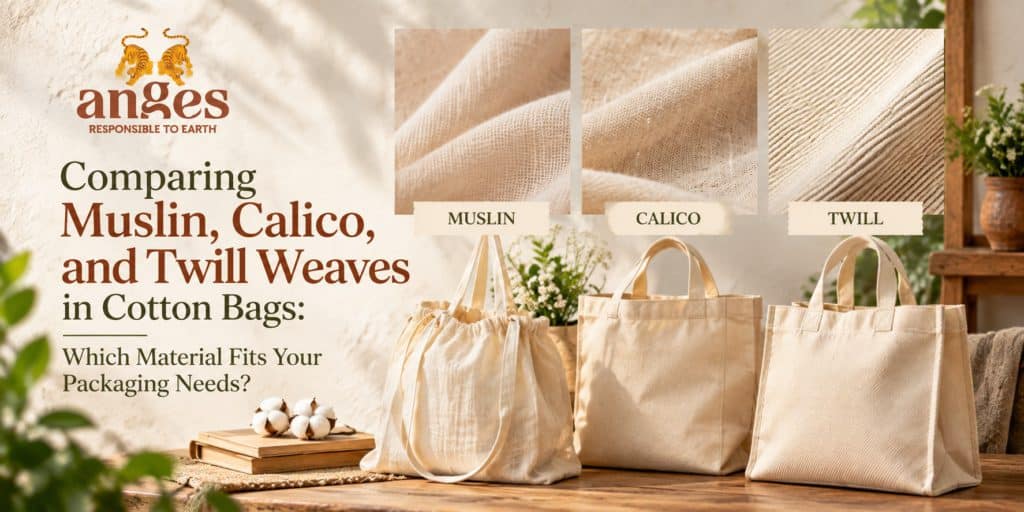
Two enquiries can reach us on the same morning and look almost identical. A jeweller wants pouches for earrings. A grocery chain wants carry bags for its stores. Both write “cotton,” and both are asking for cotton bags. If we quoted the same fabric for both, one of them would be back within a month. Either the pouch fabric would split at the seams under a few kilos of tins, or the gift pouch would feel like a feed sack. The difference is the weave. Cotton is only the fibre. How the yarns cross each other decides how the cloth carries weight, takes ink, drapes on a shop counter and what it costs per piece. At Anges we produce over 48 million bags a year for buyers in more than 64 countries, and the correction we make most often at the start of an order is a weave that doesn’t suit the product. This guide compares muslin, calico and twill on the points that actually decide that match, and it includes the checks we’d run before approving any fabric. GSM Is Useful, but It Doesn’t Tell You Everything GSM stands for grams per square metre, and most quotations lead with it. More grams generally means more cotton in the cloth, which brings more strength, more stiffness and a higher price. But GSM measures mass, not construction. Picture two fabrics that both weigh 150 GSM. One is woven tightly from fine yarn. The other is woven loosely from thick yarn. The tight one usually resists seam slippage better, while the loose one feels fuller in the hand. Same number, two different bags. Two other things are worth knowing before you compare quotes. First, GSM has a tolerance. Suppliers commonly work to around plus or minus 5 percent, so a “160 GSM” cloth could legitimately measure anywhere from about 152 to 168. Now if you have any custom specifications, specify the tolerance with the order, next, the weighing is normally done after the finished product after sizing, means after bleaching or dyeing, and this affects the number. Ask which stage the figure refers to. Names add another layer of confusion. In India, the UK and Australia, calico means plain, usually unbleached cotton. In the United States it often means a printed cotton with a small floral pattern. Muslin is called mulmul in much of India, and heavier twill is often sold as drill. So when you send a specification, give the weave, the GSM with tolerance and the finish (bleached, unbleached, dyed, pre-washed). A name alone invites a different fabric from the one you had in mind. Muslin: Light, Soft and Slightly See-Through Muslin is a plain weave. Each weft yarn goes over one warp yarn, under the next, and repeats. What makes muslin what it is comes down to two things: fine yarn and an open structure. Dhaka muslin from Bengal was prized for centuries because the yarn was spun so thin, and Wikipedia’s muslin entry covers that history well. For bags, muslin usually stays under 140 GSM and is often far lighter. It drapes rather than standing up, which is why drawstring pouches are its natural home. Buyers tend to overlook three things with muslin. The first is that it’s translucent. A dark tea tin or a red spice sachet will show through the cloth, so check the fabric against your real product before you sign off. The second is that the open weave lets yarns shift. Pinch two neighbouring threads near the cut edge of a swatch and slide them apart. If they move easily, that cloth will slip at the seam under load, and you’ll see puckering or tiny gaps along the stitch line. The third is that fine print struggles on it. Small text and hairline strokes lose definition on a soft, uneven surface, so a single-colour logo with bold strokes works far better than a detailed crest. Muslin suits jewellery, loose tea, dried flowers, candles, wedding favours and sample sachets. It’s a poor choice for anything with hard corners, real weight or a long working life. And a drawstring closure puts all the strain on one small channel of fabric, so if the pouch will hold anything heavier than a few hundred grams, ask for a double-folded casing. Calico: Where Most Retail Orders Should Start Calico is also a plain weave, but the yarn is thicker and the cloth is packed more closely. It’s usually sold unbleached, which explains the cream colour and the occasional dark speck of cotton husk. The name is commonly traced to Calicut, now Kozhikode, on the Kerala coast, from where the cloth was exported. There’s a longer account of calico’s history if you want it. Calico for bags typically sits between 120 and 200 GSM. Some points that rarely make it into supplier brochures: New calico often carries starch sizing left over from weaving, so it feels stiff and papery until it’s washed. A sample that feels harsh in your hand may soften a great deal after one wash. Judge accordingly, and ask for a washed swatch if the bag’s feel matters to your brand. Unbleached fabric also changes how ink looks. Bright colours print duller than they do on white cloth, and a white logo needs a proper white ink layer to show at all. Navy, black, rust and forest green look particularly good on the natural base. Then there’s shrinkage. Untreated calico can lose a few percent of its length on the first wash, enough to make handles look uneven. If customers will launder the bag, specify pre-shrunk cloth and ask for the shrinkage figure in writing. Calico suits retail carry bags, book and stationery bags, exhibition giveaways, campaign totes and light grocery runs. It handles a moderate load well, and of the three fabrics it’s the easiest to screen print cleanly. Twill: A Diagonal Structure With a Heavier Hand Twill changes the weave pattern itself. Instead of alternating over-one, under-one, the weft passes over two or more
How a Global Jute Bag Manufacturer Navigates EU PPWR Packaging Compliance for International Importers
Waste generated from packaging throughout the EU have reached approximately 186.5 kgs per person in the year 2022, as reported in European Commission’s own figures and the number is still counting. The EU brought some resolutions like The packaging and Packaging Waste Regulation, Regulation(EU) 2025/40. It started operating in February 2025 and it legally binds all its 27 members from 12th August, 2025 into mutual obligations. It applies in the same way in Berlin, as it did with Lisbon with no scope for a country to create its own more softer version of the same. For an importer, that single fact changes how a supplier conversation should go. Asking “is this eco-friendly?” doesn’t tell you much anymore. What you need to know is who is legally on the hook, what paperwork has to travel with the container, and whether the factory on the other end has actually built compliance into how it works, rather than added a line to a product page. We’ve spent years supplying jute and cotton packaging into Europe as a jute bag manufacturer, and this piece walks through what PPWR means for natural-fibre packaging specifically, not the regulation in the abstract, but the parts that show up on a purchase order. From a Patchwork of National Rules to One EU Regulation Before PPWR, packaging law in the EU ran through a directive from 1994, and directives leave room for national interpretation. Germany’s implementation didn’t line up neatly with France’s. A label that satisfied one customs office could get questioned at another. For a business shipping into three or four EU markets at once, that inconsistency was less a legal footnote than a genuine operational cost. PPWR closes that gap by being a regulation rather than a directive, which means it applies directly and identically in every member state without a transposition step. Manufacturers, importers, distributors, and online marketplaces are reading the same text, and it covers packaging from design through disposal: what it’s made from, how much of it is needed, how it’s labelled, and what happens once it becomes waste. Who Counts as the “Producer” — And Why That’s the Question That Matters Most of the confusion we hear from EU clients isn’t about material specifications. It’s about who is legally responsible for what. PPWR builds its obligations around the idea of a “producer”: whoever first places the packaging on a given national market. If a factory in India ships jute bags directly to an importer’s warehouse in Rotterdam, the importer is usually the one who becomes the producer for that shipment under Article 18, taking on registration, EPR reporting, and volume declarations in the destination country. In Germany, for instance, that means registering in the LUCID register run by the ZSVR; other member states run their own national equivalents. The picture shifts if the overseas manufacturer sells directly to EU consumers, through its own site or a marketplace listing. In that case the manufacturer typically becomes the producer, and Article 17 gives it the option (not, notably, an obligation in every case) to appoint an EU-based Authorised Representative to handle registration and reporting on its behalf. Where the manufacturer sells directly to end users without one, Article 45 and the related provisions of the Waste Framework Directive can make appointing a representative mandatory rather than optional, depending on the sales channel. A few duties don’t move regardless of who holds “producer” status: We put these responsibilities in writing with every EU client before the first container leaves the factory. Sorting it out on a customs query is a far worse time to discover a gap. Roles and Responsibilities at a Glance Role Core Responsibility Relevant Provision Manufacturer Design compliance, substance restrictions, technical file, Declaration of Conformity Articles 5–12 EU Importer Verifies manufacturer documentation, often registers as producer, EPR reporting Article 18 Authorised Representative Registration and reporting for non-EU producers selling direct to consumers Article 17 / Article 45 Distributor Confirms upstream compliance before making packaging available Article 19 Where Jute Already Meets the Bar, and Where It Doesn’t Most PPWR explainers are written with plastics manufacturers in mind, and natural fibre gets a paragraph near the end, almost as an afterthought. That framing has it backwards. Jute wasn’t redesigned to satisfy a circular economy regulation; it has been circular packaging since long before the term existed. It’s plant-based, compostable at end of life, and absorbs more carbon across its growing cycle than it releases in processing. As it is not plastic, it avoided two strictest plastic centric obligations in this regulation., it is to use minimum usage of plastics or reusable plastic to minimum for plastic packaging and PFAS restrictions apply mostly to food contact plastic packages from August 2026. That head start doesn’t mean the material is waved through. PPWR applies by function, not by material, so a jute bag still has to satisfy the general rules on substances of concern, packaging minimisation, and, once the relevant implementing acts are finalised, the harmonised labelling requirements expected from around August 2028. Those labels will need to show material composition and correct disposal method using standardised EU pictograms, and reusable packaging entering a formal reuse system will need its own reusability mark, sometimes with a QR code linking to collection information. The mistake we see most often isn’t ignorance of the regulation. It’s a supplier telling a buyer “it’s natural, so it’s compliant” and the buyer taking that at face value. Jute usually clears the substance and design requirements without much friction, dyes and coatings being the main exception worth checking closely, but “usually easier” and “documented” are two different things, and only one of them holds up under an audit. The Paper Trail an Importer Should Ask For A shipment either clears smoothly or sits in a bonded warehouse waiting on someone to produce a document that should have existed from day one. From a jute bag manufacturer that has actually built PPWR into its production process, an EU importer should expect to
Jute Bag Manufacturer & Shopping Bags Manufacturer for Corporate and Decorative Jute Bags
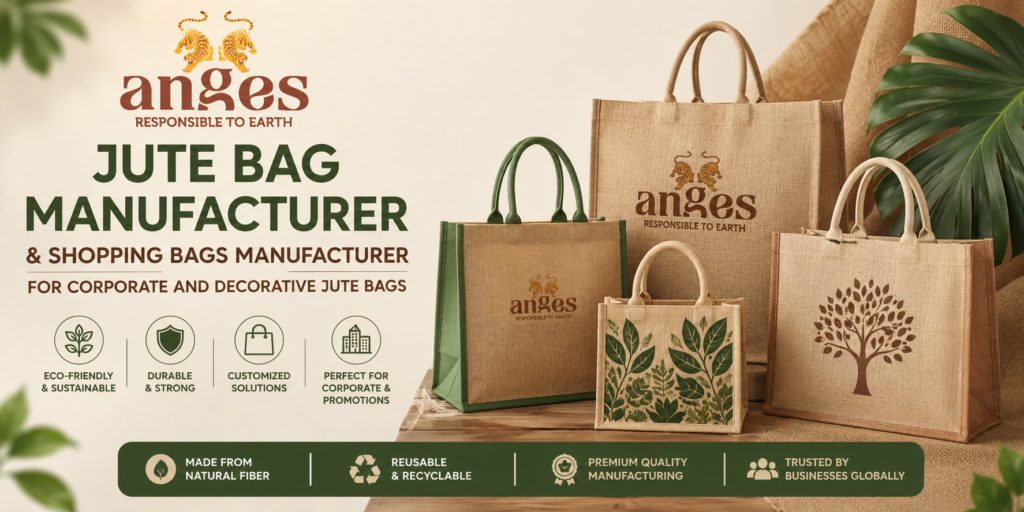
If you’re a business owner, retailer, or procurement manager searching for a dependable jute bag manufacturer, you already know the struggle. Generic ready made bags rarely fit your brand, your budget, or your bulk order timelines. What most businesses actually need is a manufacturing partner who can produce jute bags to their exact specifications, at scale, with consistent quality every single time. This guide walks you through everything you need to know before placing an order with a jute bag manufacturer company — from what to look for, to the types of bags available, to how the ordering process actually works. Why Choose a Professional Jute Bag Manufacturer? There’s a big difference between picking up a handful of jute bags from a local wholesaler and working with an actual jute bag manufacturer. When you buy off the shelf, you’re stuck with whatever size, colour, and finish is already on the shelf. There’s no room to add your logo properly, no consistency across bulk quantities, and often no accountability if the quality drops halfway through your order. A professional manufacturer works differently. They control the process from raw material selection to final packaging, which means: For businesses, exporters, retailers, and event organizers, this control over the manufacturing process is what actually protects your brand image and your budget. What Makes a Reliable Jute Bag Manufacturer Company? Not every manufacturer that claims to make jute bags is equipped to handle serious B2B orders. Before you commit, it helps to know what separates a dependable jute bag manufacturer company from one that will leave you with delayed deliveries and inconsistent quality. Here’s a practical checklist to evaluate any manufacturer you’re considering: Running through this list before you place an order saves you from costly reprints, missed deadlines, and brand inconsistency later. Custom Jute Shopping Bags for Retail and Business Use If you run a store, boutique, supermarket, or exhibition stall, your shopping bags are doing more marketing work than most people realize. Every customer who walks out with your bag is carrying your brand through the street, literally. A capable shopping bags manufacturer can build jute shopping bags around your actual retail needs: Retailers who invest in well made, properly branded jute shopping bags often find they double as free advertising — customers reuse them for groceries, travel, or daily errands, which keeps your brand visible long after the sale is made. Corporate Jute Bags Manufacturer for Branded Business Requirements Corporate buyers have a different set of priorities than retail buyers — consistency, professional finishing, and brand accuracy usually matter more than anything else. A dependable corporate jute bags manufacturer understands this and builds accordingly. Corporate jute bags are commonly used for: For all of these use cases, the details matter more than they might seem to. Logo placement needs to be precise and legible. Brand colours need to be matched accurately, not approximated. Finishing needs to look premium enough to represent the company, not like an afterthought gift. And most importantly, quality has to be consistent whether the order is for 200 bags or 20,000 — because a corporate gift that falls apart undermines the exact impression the business was trying to create. Decorative Jute Bags Manufacturer for Gifting and Special Occasions Jute isn’t just functional — in the right hands, it becomes genuinely decorative. A skilled decorative jute bags manufacturer can turn a plain jute bag into something that feels premium enough for gifting, without straying from what a manufacturer can realistically and consistently produce at scale. Decorative jute bags are commonly used for: Customization options for decorative bags typically include prints and patterns, embellishments like ribbons or tassels, coloured linings, embroidered detailing, and premium finishing touches — all of which can be adjusted based on the occasion and the budget, while keeping the manufacturing process practical and repeatable. Types of Jute Bags a Manufacturer Can Produce Before placing an order, it helps to know the general categories a manufacturer typically works with. This gives you a clearer starting point when describing your requirement. Jute Shopping Bags Built for everyday retail and grocery use. These focus on functionality — sturdy handles, reasonable load capacity, and a size that’s easy to carry. Branding is usually simple and clean. Corporate and Promotional Jute Bags Designed with brand consistency in mind. These are built for events, conferences, and campaigns where the bag represents the company, so finishing and print accuracy are prioritized. Decorative and Gift Jute Bags Focused on appearance and presentation. These bags are used where the “unboxing” or gifting moment matters as much as the bag’s function. Custom Printed Jute Bags Centered around branding and personalization — logo printing, custom artwork, and specific colour matching across any of the categories above. Customization Options Available from a Jute Bag Manufacturer One of the biggest advantages of working with a manufacturer instead of a wholesaler is the level of customization available. Here’s what buyers can typically adjust: A corporate buyer ordering bags for a conference will prioritize different combinations of these than a boutique ordering decorative gift bags — which is exactly why customization matters more than picking from a fixed catalog. How to Choose the Right Jute Bag for Your Business With so many options available, it helps to narrow things down using a few practical questions: Working through these questions before reaching out to a manufacturer makes the entire ordering process faster and more accurate. What to Ask Before Ordering from a Jute Bag Manufacturer Before you place your order, it’s worth asking the manufacturer these direct questions to avoid surprises later: Getting clear answers here upfront prevents miscommunication and protects your launch or event timeline. Why Businesses Prefer Custom Jute Bags for Branding Beyond sustainability, there’s a practical business case for choosing custom jute bags over generic packaging or plastic alternatives: For businesses trying to build recognition without a heavy ad spend, custom jute bags are a low cost, long lasting way to stay visible. How to Place a Bulk
Jute Bag Manufacturer Company: Complete Guide to Jute & Cotton Bags in 2026
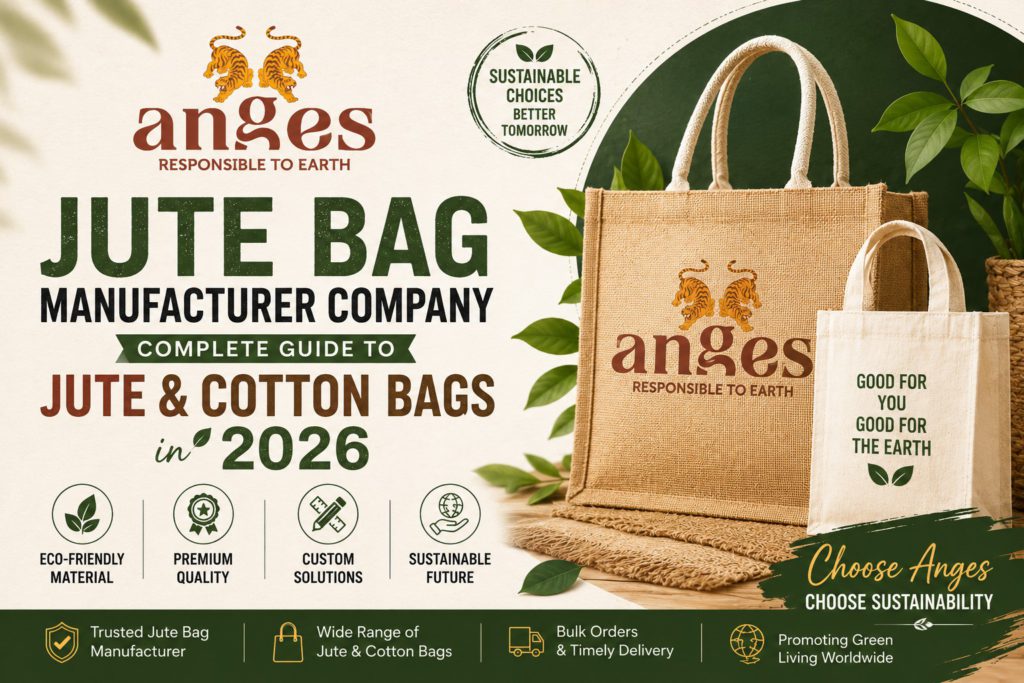
Plastic is finally losing its grip on the packaging world, and buyers everywhere are on the hunt for something that actually lasts, looks good, and doesn’t leave a mess behind for the next generation. That shift is exactly why more businesses are dropping single use plastic bags in favour of jute and cotton alternatives — and why the search for a dependable jute bag manufacturer company has become so common among retailers, gifting brands, and event planners alike. Jute and cotton bags aren’t a passing trend. They’re sturdy, reusable, and genuinely eco friendly, which makes them a smart long term investment rather than a one time purchase. But not every manufacturer delivers the same quality, and picking the wrong one can mean weak stitching, inconsistent printing, or bags that fall apart after a few uses. This guide walks you through everything you need to know before you place your next order — from the different types of jute bags and cotton bags available, to how you can tell a serious manufacturer apart from a hit or miss supplier. Introduction Consumers today are paying closer attention to what they carry home from the store. Reusable, biodegradable packaging has gone from a “nice to have” to something customers actively look for, and many state and local governments have tightened restrictions on single use plastic bags to speed that shift along. For businesses, this changes the packaging conversation. A shopping bag isn’t just something to carry goods in anymore — it’s a small, walking advertisement for your brand every time a customer steps outside with it. That’s precisely why the manufacturer you choose matters so much. The right partner gives you consistent quality, dependable delivery timelines, and bags that hold up to daily use. The wrong one can quietly damage your brand reputation with every torn handle or faded logo. By the end of this guide, you’ll understand the different jute and cotton bag options on the market, what separates a reliable jute bag manufacturer company from an average one, and how to decide which fabric fits your business needs best. Why Businesses Are Choosing Jute and Cotton Bags in 2026 Sustainability isn’t a marketing checkbox anymore — it’s become part of how customers judge a brand before they even walk through the door. Companies that switch to reusable jute or cotton packaging send a clear, visible signal that they care about more than just the sale. There’s also a practical branding upside. A well printed jute or cotton bag turns into free advertising the moment a customer carries it out in public, at a market, or even years later at the grocery store. Add in growing corporate responsibility commitments and a genuine consumer preference for products that don’t end up in a landfill within a week, and it’s easy to see why so many businesses are rethinking their packaging strategy this year. Benefits of Jute Bags Jute has earned its reputation as one of the toughest natural fibres in the packaging world, and it comes with a few standout advantages: A well made jute bag can genuinely outlast dozens of plastic bags, which is part of why it’s become the go to choice for grocery chains and gifting brands alike. Benefits of Cotton Bags Cotton brings a different set of strengths to the table, and it’s often the preferred pick when a softer, more polished look is the priority: Where jute leans rustic and rugged, cotton leans clean and refined — which is why many businesses end up stocking both. Understanding Different Types of Jute Bags Not all jute bags serve the same purpose. Here’s a breakdown of the main categories you’ll come across while sourcing from a manufacturer. Jute Shopping Bags Jute shopping bags are the workhorse of the lineup — built for grocery stores, retail counters, and everyday errands. They’re designed to handle repeated trips, heavier loads, and daily wear without losing their shape, which makes them a natural replacement for plastic carry bags at checkout counters. Jute Gift Bags When presentation matters, jute gift bags step in. Their natural texture already looks festive, which makes them a favourite for weddings, festivals, and corporate gifting. Many businesses use them as an easy way to elevate a gift box or hamper without extra packaging costs. Jute Beach Bag Spacious, breathable, and sturdy enough to hold a towel, sunscreen, and a change of clothes, the jute beach bag has become a popular seasonal item for travel and vacation brands. Its rugged look also fits naturally into fashion forward summer collections. Custom Jute Bags For brands running promotional campaigns, trade shows, or marketing giveaways, custom jute bags offer a simple way to put a logo directly in front of customers. Since jute takes printing well and photographs nicely on social media, it’s a favourite for brand marketing pushes that need to leave an impression. Personalised Jute Bags Personalised jute bags take customization a step further — think names, initials, or event specific designs. They’re a popular pick for weddings, corporate events, and personalized gifting, where a generic bag just wouldn’t feel special enough. Different Types of Cotton Bags Cotton bags come in a few distinct styles, each suited to a slightly different use case. Cotton Canvas Bag Thick, heavy duty, and built to last, the cotton canvas bag is a favourite for grocery use and premium branding alike. Its sturdy weave holds printed logos crisply, which is why so many fashion and lifestyle brands lean on canvas for their tote bag lines. Cotton Backpack Cotton backpacks bring the same eco friendly material into a more functional, everyday format. They’re commonly used for school, travel, and promotional giveaways, offering a practical alternative to synthetic backpacks for anyone commuting daily. Everyday Cotton Bags These are the flexible, all purpose cotton bags used across retail counters, book fairs, and exhibition giveaways. Lightweight and easy to print on, they’re often the most budget friendly cotton option for bulk orders. How to Choose the Right Jute Bag
Why HR Departments Love Working with a Corporate Jute Bags Manufacturer for Onboarding
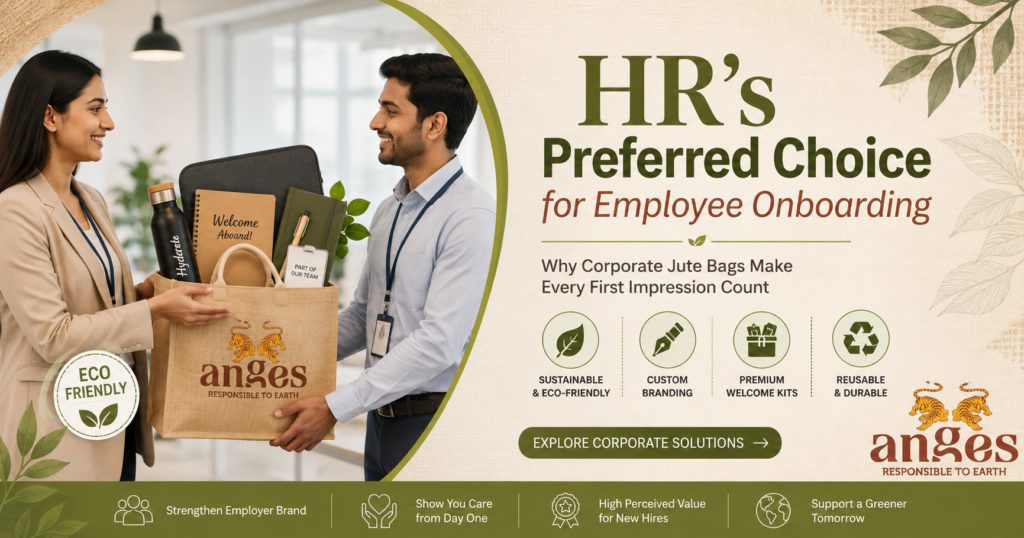
There is something about that first day, isn’t there? You walk in — or these days, maybe you log in — and there is this little welcome pack sitting there. I have seen people’s faces change over something as simple as a bag. A real bag. Not the plastic kind that rips before Friday. HR folks have caught on to this in a big way. Over the years, many of them have started calling us, a Corporate Jute Bags Manufacturer, to put together onboarding kits that actually last. At Anges Bags, we make a lot of bags. North of 48 million every year, shipping out to more than 64 countries. A fair number of those end up with brand-new employees at companies you would recognise. When HR managers sit down with us, it rarely stays about the bag for long. It becomes about what that first impression should feel like. So, let’s get through what we witnessed, if it worked and why the pairing is perfect. The slow, steady turn toward welcome kits that don’t harm the planet A few years ago, I’d watch companies stuff onboarding kits with things destined for the bin. That script has flipped. Deloitte published a 2024 Global Human Capital Trends https://www2.deloitte.com/us/en/insights/focus/human-capital-trends.html piece that made a point — when sustainability seeps into the employee experience, engagement and retention improve. HR leaders read that and ask, where do we begin? Often, the welcome bag is the easiest, most visible starting point. Jute works because it feels honest. Earthy, warm. You drop in a notebook, a reusable bottle, maybe the handbook, and suddenly it’s not a bundle of freebies. It says something without shouting. I’ve had more than one HR manager tell me the bag does half the talking about company values before orientation even kicks off. Why new hires actually keep these bags Truth is, not every bag is cut out for this. HR teams need something that can take a beating. Someone will jam a laptop, gym clothes, and a lunch box in there. We usually nudge them toward laminated jute. It can keep its shape intact, can sustain a small amount of drizzle, and do not look worn out after a week.The other bit? The bag sticks around. Once I saw a person carrying one of our bags with the particular company logo. He has been using it for two years. Still hauling it. That is the kind of brand exposure you cannot pay for. A solid manufacturer helps HR choose the right weight, handle stitching, finish — so that bag earns a spot in someone’s daily rhythm. A real project that stuck with me A while back, a global IT firm got in touch. They were onboarding over 2,000 grads in waves. Their old plastic kits were, to put it kindly, forgettable. The HR director said half the bags didn’t survive a month. We worked with their team, designed a minimal jute backpack — foldable, light, just their purpose statement printed on it. Nothing overdone. Six months later they shared some numbers. Bag usage among new hires was up nearly 40% versus the old plastic stuff. That made the HR team look smart, and it reaffirmed something for us: listening beats fancy design every time. It wasn’t complicated. We just heard what their people would actually carry. Custom touches that feel personal Every company’s culture is its own beast. A startup might want bright colours and a huge logo. A law firm? Probably muted tones, a small debossed crest. We’ve done both. Jute takes screen printing, digital, embroidery surprisingly well, so there’s room to get creative without the budget spiraling. Beyond visuals, you can mess with the function. Padded laptop sleeve, inner pocket, zipper, convertible handles from a Corporate Jute Bags Manufacture. I’ve seen HR teams come to us with a rough sketch on a napkin, and we turn it into a sample. That back-and-forth gives the final bag a sense of belonging — not like it was picked from a catalogue. A bag that lives a life, not dies in a drawer The best feedback we hear: “I’ve had mine for three years.” Jute is just tough. We pull handles and seams in the factory until they fail, so we know the limits. When someone visits a market on his off duty, the logo becomes also part of his personal life which indicates the profession he belongs to. THis is a silent swag which is not hidden during his off duty. Keeping the budget sensible Onboarding budgets rarely have much slack. Cutting out middlemen helps. We price from the factory floor, so per-unit costs stay reasonable even for big orders. A well-made jute bag that lasts two years costs less per impression than a cheap bag swapped out every quarter. The HR folks who run the numbers usually end up pitching it as a clever spend, not a fluffy extra. Deliveries that don’t give HR a headache Onboarding schedules are tight. Kits have to be there on the day, whether at the office or on someone’s doorstep. We’ve shipped to corporate HQs, regional hubs, and straight to home addresses. I remember an HR coordinator onboarding a fully remote cohort during a lockdown. We sent kits to 400 different addresses in a single week, each trackable. She later said it was one fewer thing to panic about. That’s the goal, really. Trust is non-negotiable HR teams take on real risk when they pick a supplier. If a factory has shady practices or can’t back up claims, the company’s name gets dirty. We’ve always been open about our certifications — ISO 9001:2015, SA8000, Sedex member. These are not decorations. They mean auditors show up, check things, and we hand over paperwork when compliance asks. That kind of transparency can shave weeks off the vendor approval timeline. I’ve seen it happen. Tying it to bigger sustainability goals Lots of companies now have public green targets. Onboarding kits can contribute a little. Jute is biodegradable,
Stylish, Responsible, and Everywhere: How organic cotton bags Are Shaping Eco-Youth Culture

Stand near a college gate for ten minutes. Watch people as they pass. You will begin to notice something small, almost easy to miss. Fewer plastic bags. More fabric ones—creased, reused, sometimes printed, sometimes plain. No one is drawing attention to it. That is the point. The spread of organic cotton bags has not arrived with noise. It has settled in, slowly, until it began to feel ordinary. A Change That Slipped Into Routine Not long ago, carrying a reusable bag still felt deliberate. You had to remember it, carry it, make space for it. Now it sits folded inside another bag, almost by default. There is, of course, a larger push behind this. Policy changes, awareness drives, restrictions on plastic use. The United Nations Environment Programme has tracked this steady shift across cities:https://www.unep.org/interactives/beat-plastic-pollution/ But rules alone do not explain behaviour. What matters more is repetition. A person uses the same bag for groceries, then for class, then again the next day. After a while, it stops being a decision. How It Found Its Way Into Everyday Style These bags were never meant to be fashionable. Yet, somehow, they slipped into that space. Look around and you will see a certain pattern: They do not compete with what someone is wearing. They sit alongside it. Easy to carry, easy to ignore, yet oddly consistent. Anges Bags seems to understand this balance. The designs do not try too hard, which may be why they hold up over time. The Matter of Daily Use A bag is tested by routine, not by appearance. Books, a laptop, maybe a water bottle—sometimes all together. The weight adds up. Weak stitching shows quickly. Handles start to strain. This is where organic cotton bags hold their ground. The fabric is thick enough to carry load, yet soft enough not to feel harsh. It bends, folds, adapts. It does not insist on structure. And after weeks of use, it changes slightly. Not damaged, just worn in. There is a difference. A Subtle Form of Saying No There is a kind of quiet resistance in this shift. No slogans. No declarations. Just a repeated act—declining a plastic bag, reaching for your own. That small action, done often enough, begins to reshape expectation. Shop counters adjust. Sellers begin to assume you might already have a bag. In that sense, choosing organic cotton bags is less about making a statement and more about stepping away from an older habit. Anges Bags fits into this without pushing itself forward. It offers something usable, which, in this case, is enough. Why They Stay in Circulation Many so-called sustainable products do not last beyond intent. They are bought, used briefly, then forgotten. These tend to stay. Perhaps because: A bag that works in more than one situation is less likely to be replaced. That alone extends its life. Something That Feels Settled Calling this a trend feels slightly off. The movement toward organic cotton bags is tied to larger changes—regulation, environmental pressure, and everyday convenience. None of these are temporary. What has changed, more quietly, is behaviour. People are not thinking about it as much anymore. They just carry the bag. And when something becomes that ordinary, it tends to stay.
How a Jute Bag Manufacturer Company Is Elevating Sustainable Fashion

Sustainable fashion no longer lives only in fabric labels. It shows up in the things carried alongside the outfit. Bags, once secondary, now shape the whole silhouette. That shift did not begin in styling studios. It began in production floors. A jute bag manufacturer Company does more than supply inventory. It decides how raw fiber enters fashion conversation. Whether it stays utilitarian. Or becomes refined enough to sit next to designer clothing without apology. Jute is uncomplicated. It has weight. It has texture. It does not disguise its weave. The question is not whether the material is sustainable. The question is how carefully it is handled. When Roughness Becomes Intentional Designer wardrobes today are restrained. Straight cuts. Controlled layering. Quiet color palettes. A jute bag can either disturb that balance or stabilize it. Too loose, and it collapses. Too decorative, and it feels forced. Too thin, and it cheapens the look. A precise jute bag manufacturer Company adjusts what most people never see. Stitch tension. Panel thickness. Handle drop. Base reinforcement. Those technical decisions determine whether the bag sits cleanly against structured tailoring or pulls it off balance. Texture remains. Disorder does not. Craft Without Decoration There is interest in craft, but not in excess detail. The appetite now is for clarity. Jute already carries variation. The weave speaks. Attempts to over-polish it often strip away its appeal. The stronger approach is restraint—minimal printing, controlled dye, straight seams that do not fight the fabric. A serious jute bag manufacturer Company understands when to stop. Craft becomes evident in alignment, not ornament. The bag does not try to look handmade. It simply does not look careless. Durability Is the Real Sustainability A sustainable accessory that loses structure in months contradicts its own purpose. Base panels matter. Seam density matters. Handle anchoring matters more than logo placement. A bag must distribute weight evenly or it will sag. And once it sags, it rarely recovers. A disciplined jute bag manufacturer Company builds strength where strain accumulates. Double stitching at stress points. Balanced gussets. Controlled cutting to reduce fray. These are quiet reinforcements. They determine whether the bag survives repetition. Green Footprints Are Built, Not Announced Jute’s renewable nature is familiar. The more relevant conversation is what surrounds it. What ink is used. How water is managed. How excess fiber is handled. How packaging is reduced before shipping. A responsible jute bag manufacturer Company does not lean on the word “eco” and stop there. It tightens processes. It tracks waste. It limits chemical load. It adjusts energy use where possible. Sustainability, in practice, becomes a pattern of small controls rather than a single claim. Where Production Shapes Aesthetics When a jute bag appears beside tailored clothing, it signals alignment with reduction, less gloss, less synthetics, less excess. That visual statement begins in the factory as fiber grading influences stiffness. Weave control influences proportion. Print calibration influences restraint. A forward-thinking jute bag manufacturer Company recognizes that manufacturing decisions shape fashion outcomes. The styling comes later.The bag may look simple. The precision behind it is not. Sustainable fashion will continue to elevate objects that hold form, hold function, and hold up over time. Manufacturers who build with that discipline quietly, consistently will define how jute sits within that space.That is where elevation actually begins.
Best Use-Cases for Cotton Bags Work, Travel, Shopping, and Brand Promotions

Cotton bags are often discussed as an ethical substitute. Their real strength becomes evident only over time, as they move repeatedly through work routines, travel patterns, shopping habits, and brand-led distribution without losing relevance. In the bag industry, material conversations tend to stop at composition. Fabric weight, weave, finish, and certification dominate the discussion. What is rarely examined is what happens after a bag enters everyday life—when it is no longer handled carefully or used as intended. A bag’s value is not tested at purchase. It is tested months later, when it has been overloaded, folded awkwardly, washed without instruction, and reused out of convenience rather than intent. Many materials fail quietly at this stage. Cotton does not. It adjusts. That adjustment is gradual and forgiving. Cotton neither preserves a pristine form nor collapses under strain. It settles into use. This quality, often overlooked, explains why cotton bags remain present in daily circulation even as alternatives cycle in and out of relevance. Work Use-Cases: Designed for Shifting Professional Life Work no longer happens in a single place or posture. Offices blur into shared spaces, commutes stretch into work hours, and formality fluctuates throughout the day. Bags that are too polished or too technical tend to feel misplaced as these transitions accumulate. Cotton bags handle this ambiguity well. They carry daily essentials without imposing an identity. They do not suggest hierarchy or casualness too strongly in either direction. As their surface changes over time, the change reads as use rather than decline. This allows the bag to remain appropriate even as work contexts evolve. There is also a behavioral advantage. Cotton does not demand care. When an object does not require protection, it is more likely to be used consistently. Over time, that consistency determines which bags stay in rotation. Travel Use-Cases: Reliability in Uncontrolled Conditions Travel exposes design exaggeration quickly. Rigid forms become inconvenient. Coated surfaces show wear early. Features that promise efficiency often require careful handling to function as intended. Cotton bags succeed by avoiding these traps. They are not designed to impress under inspection, but to perform under indifference. They fold when space tightens, expand when plans change, and recover without visible penalty. This makes them especially effective for short trips, daily transit, and secondary luggage roles. Travelers tend to rely on what tolerates inconsistency. Cotton earns that trust through repetition rather than performance claims. Shopping Use-Cases: When Reuse Becomes Automatic Shopping behavior is driven by immediacy. Bags are reused not because people plan to reuse them, but because they are already there. Cotton bags remain accessible because they store easily, carry comfortably, and withstand repeated loading without structural fatigue. Over time, cotton bags stop being framed as reusable options and start functioning as defaults. This transition is subtle but decisive. Once a bag reaches this stage, reuse becomes automatic. The bag no longer represents a choice. It represents convenience. This is why cotton continues to appear in everyday settings long after novelty materials lose traction. Brand Promotions: Exposure That Accumulates Quietly Promotional bags often prioritize visibility over longevity. When the material feels temporary, the brand message disappears along with the bag. Cotton supports a slower, more durable form of exposure. A well-made cotton promotional bag integrates into routine. It shows up repeatedly, not because it demands attention, but because it remains useful. Brand visibility builds through frequency and familiarity rather than emphasis. Manufacturers aligned with this thinking design cotton bags for endurance instead of immediacy. This perspective is evident in how Anges approaches cotton—as a material chosen for its long-term behavior rather than short-term appeal. Closing Thought The staying power of cotton bags has little to do with trend cycles or messaging strategies. It rests on their ability to absorb everyday use without protest. Objects that ask less of the user tend to last longer. In that sense, cotton bags succeed not by standing apart, but by becoming part of routine.
Trendy Jute Shopping Bags Elevating French Sustainable Fashion Pairing with designer outfits, artisan stories, and EU green policies.

In France, fashion rarely arrives with instructions. It settles. It becomes familiar before it becomes visible. Objects stay when they stop asking to be noticed. Sustainability has followed this same rhythm. It is no longer framed as a choice to make, but as a condition already in place. Within this quieter landscape, jute shopping bags have slipped into daily fashion without announcement. They were not introduced as accessories. They were accepted as objects that worked. The rest followed on its own. Texture That Interrupts Without Distracting French style has always allowed interruption. Something rough against something refined. A break in uniformity that feels intentional without being explained. Jute works here because it does not try to soften itself. The weave is visible. The surface resists polish. When carried with tailored clothing or pared-back designer pieces, the contrast does not clash. It settles. In Paris, this pairing reads as ease rather than effort. The bag does not elevate the outfit. It steadies it. Luxury That Allows Imperfection Luxury, in the French sense, often leaves room for wear. Not decay, but use. Something that looks untouched can feel unfinished. When jute shopping bags appear alongside designer clothing, they lower the temperature of the look. They remove performance. The outfit feels lived in, even when it is carefully chosen. This is not accidental. French fashion tends to trust materials that show their nature. Jute does not pretend to be anything else. Craft That Exists Without a Caption Craft in France is rarely explained at length. It is understood through repetition and touch. Materials are expected to hold their own. Jute does this quietly. The fibers are uneven. The structure is simple. Many bags circulating in French markets and boutiques avoid decorative urgency. Prints are minimal. Construction feels resolved, not exploratory. There is no expectation that the bag should tell a story. Its presence is the story. Daily Movement Shapes Meaning Fashion in France stays close to movement. People walk. They shop often, lightly. Bags are not rotated for variety. They are reused because they are there. This is where jute shopping bags gain weight. They move through bakeries, bookshops, markets, and side streets. They are set down, folded, picked up again. Over time, the material loosens. The bag changes slightly. This change is not corrected. It is allowed. Sustainability as Background Noise Environmental responsibility in France is rarely foregrounded. It sits behind decisions rather than on top of them. This expectation is reinforced by wider European structures, including standards shaped through the European Union, which have normalized material accountability. As a result, sustainability is not something a product earns credit for. It is something it must already meet. Items that align continue quietly. Items that do not simply disappear from view. Jute fits easily into this silence. Its lifecycle makes sense without explanation. That clarity matters. Why Jute Remains Jute bags persist in French sustainable fashion because they do not need revision. They adapt without losing character. They do not signal awareness. They assume it. They soften tailored looks. They steady simple ones. They move easily between errands and social moments without adjustment. In France, relevance is often measured by how little something needs to justify itself. Jute shopping bags have reached that point. Their presence feels settled, almost unremarkable. And that, in this context, is precisely why they belong.