
Architecting Reinforced Handles and Custom Pocket Layouts in B2B Custom Jute Bags
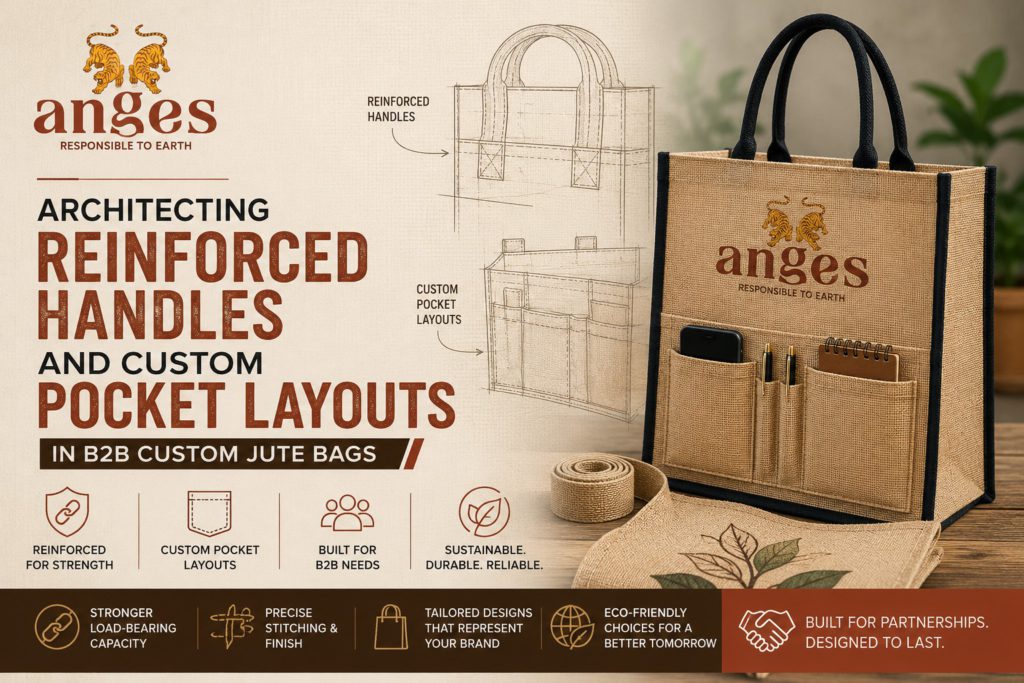
A client once sent us photos of 40 handles, all pulled loose at the same seam, all from the same 3,000-unit batch. Different manufacturer, different order, before they came to us. The stitching wasn’t wrong exactly — it was a straight lockstitch, done cleanly. It just wasn’t built for what the bag was actually going to carry: bottled sauces, lifted daily, by hand, out of a retail display. That’s the gap this guide is written to close. Handle failure on jute orders is almost never a sewing-quality problem. It’s a specification problem — nobody defined the load before the pattern was cut. At Anges Bags, we manufacture custom jute bags for retail, corporate gifting, and export clients, and the handle-and-pocket brief is the one part of the design process that gets rushed most often. Colors, print, and branding get weeks of back-and-forth. Stitch pattern gets a nod and a “looks fine.” This piece is written for the people who sign off on that nod — procurement leads, brand managers, sustainability teams — so the next sign-off is an informed one. Where Handle Failure Actually Starts Handles don’t fail because thread snaps. They fail because a stitch line was asked to do a job it wasn’t built for. Picture the mechanics: every lift transfers the bag’s full contents-weight through two small junctions where handle meets body panel. A single straight stitch line concentrates that entire load onto a narrow band of thread, repeatedly, across the life of the bag. Jute fiber is coarser and less forgiving than cotton under that kind of repeated pressure — it frays at the stress point rather than stretching to absorb it, which is part of why the manufacturing literature on reinforced handles treats them as load-bearing structures, not decorative attachments. For a single gift tote, this is a minor annoyance. For a corporate order of a few thousand units, it’s a pattern that surfaces two to three weeks after delivery, once real-world handling has had time to find the weak point — and by then, the fix is a reorder, not a repair. Building a Handle Mount That Holds There are four variables that determine whether a handle mount survives its working life: stitch pattern, corner reinforcement, drop length, and material choice. None of them are exotic. All of them get skipped when a spec sheet just says “reinforced handles” without defining what that means. Stitch pattern. Box stitching — a rectangle of stitching at the attachment point, often crossed with a diagonal X — spreads pulling force across a wider stitched area instead of one line. Bar-tacking, a short dense stitch cluster, gets added at the corners of that box specifically because corners are where stress concentrates first, before the rest of the seam shows any wear. Bag manufacturers building for heavy retail and agricultural loads use exactly this combination — box-X plus corner bar-tacking — for bags rated to carry meaningful weight. Drop length. The distance a handle hangs below the top seam isn’t a style choice, it’s a leverage calculation. A shorter drop puts more strain on the shoulder seam every time the bag is filled and lifted; a longer drop distributes that same force over a wider arc. For grocery-weight loads, we generally spec a longer drop than what looks “correct” in a flat sample photo — because a flat sample is empty, and the bag never will be. Backing panel. This is the detail most buyers never see, because it’s meant to be invisible. An internal reinforcement strip, stitched between the outer jute layer and the base of the handle, takes on the actual load-bearing work so the visible stitching doesn’t have to. We spec this for any order carrying more than light, dry retail goods — grocery items, bottled products, printed materials with real weight. Handle material. Braided jute keeps the aesthetic fully natural and performs fine for gifting and light retail. Cotton webbing or bamboo, stitched into a jute body, holds up better under daily reuse — grocery bags, trade-show giveaways that double as work totes, anything expected to survive more than a few lifts a week. Neither choice is “correct” on its own; it depends on what the bag is going to carry and how often, which is a conversation worth having before the sample stage rather than after a complaint. What Buyers Are Actually Asking For Inside the Bag Something has shifted in what corporate buyers request for promotional and gifting bags. Two years ago, most briefs asked for a single open compartment. Now, a meaningful share of the briefs we receive specify internal organization — a slip pocket, a divider, somewhere to put a phone or a card that isn’t loose against the bottom of the bag. The current promotional bag market reflects the same shift: multi-compartment interiors are moving from a premium feature to something closer to a baseline expectation, because a bag with somewhere to put things gets used again; a bag that’s just an open sack gets folded into a drawer. Jute complicates pocket design in a way canvas doesn’t. Canvas drapes and folds; jute holds its shape and resists tight folding. A pocket layout copied directly from a cotton tote spec sheet can sit stiff or restrict access on a jute body if nobody adjusts for that difference. Placement That Works With the Fabric, Not Against It Interior slip pockets, stitched to the side panel, hold a phone or a small branded insert without interfering with how the bag folds flat for shipping — which matters more for jute than for softer fabrics, since a stiff bag with a poorly placed pocket won’t fold at all. Center divider pockets suit corporate gifting kits that need two distinct compartments — one for a physical item, one for a card or printed insert. This works because the divider itself adds structure, which plays to jute’s natural stiffness instead of fighting it. Exterior utility pockets make sense only when the bag is meant
Jute Bag Manufacturer Company: Complete Guide to Jute & Cotton Bags in 2026
Plastic is finally losing its grip on the packaging world, and buyers everywhere are on the hunt for something that actually lasts, looks good, and doesn’t leave a mess behind for the next generation. That shift is exactly why more businesses are dropping single use plastic bags in favour of jute and cotton alternatives — and why the search for a dependable jute bag manufacturer company has become so common among retailers, gifting brands, and event planners alike. Jute and cotton bags aren’t a passing trend. They’re sturdy, reusable, and genuinely eco friendly, which makes them a smart long term investment rather than a one time purchase. But not every manufacturer delivers the same quality, and picking the wrong one can mean weak stitching, inconsistent printing, or bags that fall apart after a few uses. This guide walks you through everything you need to know before you place your next order — from the different types of jute bags and cotton bags available, to how you can tell a serious manufacturer apart from a hit or miss supplier. Introduction Consumers today are paying closer attention to what they carry home from the store. Reusable, biodegradable packaging has gone from a “nice to have” to something customers actively look for, and many state and local governments have tightened restrictions on single use plastic bags to speed that shift along. For businesses, this changes the packaging conversation. A shopping bag isn’t just something to carry goods in anymore — it’s a small, walking advertisement for your brand every time a customer steps outside with it. That’s precisely why the manufacturer you choose matters so much. The right partner gives you consistent quality, dependable delivery timelines, and bags that hold up to daily use. The wrong one can quietly damage your brand reputation with every torn handle or faded logo. By the end of this guide, you’ll understand the different jute and cotton bag options on the market, what separates a reliable jute bag manufacturer company from an average one, and how to decide which fabric fits your business needs best. Why Businesses Are Choosing Jute and Cotton Bags in 2026 Sustainability isn’t a marketing checkbox anymore — it’s become part of how customers judge a brand before they even walk through the door. Companies that switch to reusable jute or cotton packaging send a clear, visible signal that they care about more than just the sale. There’s also a practical branding upside. A well printed jute or cotton bag turns into free advertising the moment a customer carries it out in public, at a market, or even years later at the grocery store. Add in growing corporate responsibility commitments and a genuine consumer preference for products that don’t end up in a landfill within a week, and it’s easy to see why so many businesses are rethinking their packaging strategy this year. Benefits of Jute Bags Jute has earned its reputation as one of the toughest natural fibres in the packaging world, and it comes with a few standout advantages: A well made jute bag can genuinely outlast dozens of plastic bags, which is part of why it’s become the go to choice for grocery chains and gifting brands alike. Benefits of Cotton Bags Cotton brings a different set of strengths to the table, and it’s often the preferred pick when a softer, more polished look is the priority: Where jute leans rustic and rugged, cotton leans clean and refined — which is why many businesses end up stocking both. Understanding Different Types of Jute Bags Not all jute bags serve the same purpose. Here’s a breakdown of the main categories you’ll come across while sourcing from a manufacturer. Jute Shopping Bags Jute shopping bags are the workhorse of the lineup — built for grocery stores, retail counters, and everyday errands. They’re designed to handle repeated trips, heavier loads, and daily wear without losing their shape, which makes them a natural replacement for plastic carry bags at checkout counters. Jute Gift Bags When presentation matters, jute gift bags step in. Their natural texture already looks festive, which makes them a favourite for weddings, festivals, and corporate gifting. Many businesses use them as an easy way to elevate a gift box or hamper without extra packaging costs. Jute Beach Bag Spacious, breathable, and sturdy enough to hold a towel, sunscreen, and a change of clothes, the jute beach bag has become a popular seasonal item for travel and vacation brands. Its rugged look also fits naturally into fashion forward summer collections. Custom Jute Bags For brands running promotional campaigns, trade shows, or marketing giveaways, custom jute bags offer a simple way to put a logo directly in front of customers. Since jute takes printing well and photographs nicely on social media, it’s a favourite for brand marketing pushes that need to leave an impression. Personalised Jute Bags Personalised jute bags take customization a step further — think names, initials, or event specific designs. They’re a popular pick for weddings, corporate events, and personalized gifting, where a generic bag just wouldn’t feel special enough. Different Types of Cotton Bags Cotton bags come in a few distinct styles, each suited to a slightly different use case. Cotton Canvas Bag Thick, heavy duty, and built to last, the cotton canvas bag is a favourite for grocery use and premium branding alike. Its sturdy weave holds printed logos crisply, which is why so many fashion and lifestyle brands lean on canvas for their tote bag lines. Cotton Backpack Cotton backpacks bring the same eco friendly material into a more functional, everyday format. They’re commonly used for school, travel, and promotional giveaways, offering a practical alternative to synthetic backpacks for anyone commuting daily. Everyday Cotton Bags These are the flexible, all purpose cotton bags used across retail counters, book fairs, and exhibition giveaways. Lightweight and easy to print on, they’re often the most budget friendly cotton option for bulk orders. How to Choose the Right Jute Bag