
How Luxury Cosmetic and Skincare Brands Package Holiday Sets in Reusable Jute Gift Bags
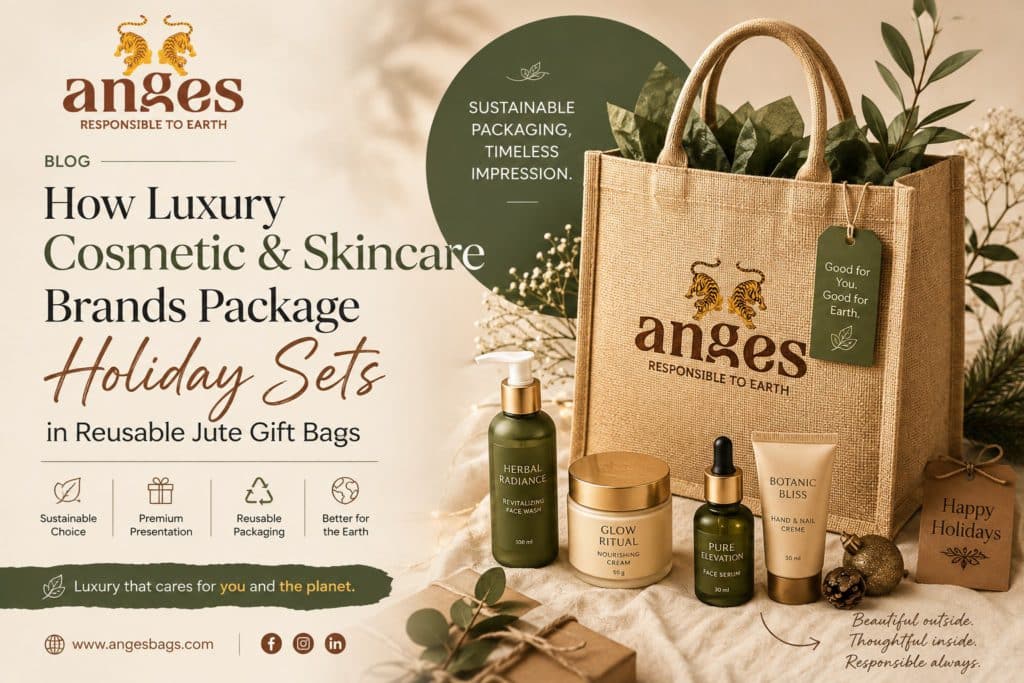
Last December a cosmetics client of ours ran a small experiment without telling us in advance. Two identical holiday skincare sets, same products, same price, shipped in two different bags: a printed cardboard tote for one batch, an unlaminated jute bag with a cotton drawstring for the other. No survey, no formal split test. They just read the reviews afterward to see which bag people bothered mentioning. The jute one showed up. A few customers said they were keeping it “for something.” Nobody said that about the tote. That’s one anecdote from one brand, not a study, and it wouldn’t hold up in a peer review. But it tracks with a pattern we see constantly at Anges Bags, where we manufacture around 48 million bags a year including Jute Gift Bags for clients across 64 countries: packaging that survives past the unboxing moment keeps working for the brand afterward. Packaging that doesn’t gets forgotten by New Year’s. Jute has become the default answer for a lot of beauty brands trying to solve this for their holiday sets, and it’s worth being specific about why, because most of the coverage on “sustainable packaging” treats jute, paper, and bamboo as interchangeable options in the same trend piece. They aren’t. Packaging Gets Ninety Seconds to Justify Its Cost A holiday beauty set has a short window to earn its price tag. The box opens, an impression forms, and the packaging gets kept or it doesn’t. Most gift packaging is designed for that window alone. Now, buyers are visibly getting tired of such high words for this impression. The CEO of Clement Packaging, Helen Yang, said in BeautyMatter’s 2026 packaging coverage that there is an ignorance with clueless eco-language which does not mean anything. Actual functional terms like traceability, carbon count, real recycled content percentages instead of a leaf icon on a bag actually mean something that can be termed as eco-friendly. It is a very honest question, as a bag with written sustainable means nothing if actual thing is just a marketing gimmick Jute skips this problem by not needing to make the claim in the first place. You can see the weave. You can feel that it isn’t laminated cardboard without looking at the label. That matters more now that people have started ignoring sustainability language on sight, the same way they ignore “clinically proven” on a skincare bottle. Kraft paper, aluminum tins, glass, bamboo. All getting attention in beauty packaging right now, all solving different problems. Aluminum works for lotion because it needs a rigid container. Glass signals weight and permanence for fragrance. None of it assumes anyone will still be carrying the packaging around next August. Jute does. The Part That Actually Separates Jute From Paper A printed paper bag survives one trip home if the handles hold, maybe two if you’re careful. A branded cosmetic box gets flattened for recycling, more often it just gets thrown out. A jute bag with a reinforced base and stitched handles carries someone’s groceries or gym clothes six months later, and it does it again after that. This is what beauty and lifestyle brands are actually asking for in our production runs: laminated jute, box-stitched handles, not glued ones. The reason isn’t glamorous. It’s rated for repeated load instead of a single trip, and that’s the whole difference. There’s a second reason jute fits the current moment that has nothing to do with sustainability. Clawscustomboxes’ review of 2026 beauty packaging trends calls it “quiet luxury” — premium signaled through weight and tactile finish rather than loud design. Jute does that without trying. No foil stamping required. No oversized ribbon doing the persuading. The texture handles it. What Happens Six Months After the Unboxing Video Most packaging guides mention that jute is biodegradable and move on. What actually determines whether the packaging spend was worth anything is whether the bag gets used again. A 2025 UK consumer study by WRAP found 74% of people who received a gift in a sturdy paper bag kept it for later use, and a subtle “reuse me” line on the bag pushed that number higher still. That’s paper. Jute tends to outlast printed paper stock under repeated folding, though, and this is worth saying plainly: we don’t have a published figure specific to jute to cite here. If a supplier hands you a precise reuse percentage for jute bags, ask where it came from. What we can say from actually making these bags for a living: a jute tote still intact six months after Christmas is sitting somewhere visible. A kitchen counter. The back seat of a car. Someone’s closet, holding gym clothes now instead of a skincare set. A flattened cardboard box in a recycling bin isn’t doing any of that. “Extended brand visibility” is a phrase that gets thrown around a lot in packaging marketing without anyone explaining what it actually means. This is what it means. A bag someone keeps looking at. There’s also something smaller happening with Jute Gift Bags specifically. Nobody feels bad tossing a shiny plastic tote in the trash. People hesitate before binning something that looks handmade, even when a machine made it. That small hesitation is doing quiet work for whoever’s name is printed on the bag. Customer Delight, Defined Instead of Assumed “Customer delight” gets thrown around loosely enough in packaging marketing that it’s worth pinning down what it actually means for a holiday set. It means the person unwrapping the gift, often not the person who bought it, forms an opinion about the brand from the packaging alone, before touching a single product inside. That’s a different audience than the buyer, which is easy to forget while designing packaging. The buyer read reviews and compared ingredients before deciding anything. The recipient just sees a bag. Industry data on the luxury gift packaging market gives some sense of the scale here: over 1.2 billion luxury gift boxes and premium bags moved globally in 2024, and 68% of shoppers