
Why HR Teams Are Adding Personalised Jute Bags to Remote Onboarding Welcome Kits
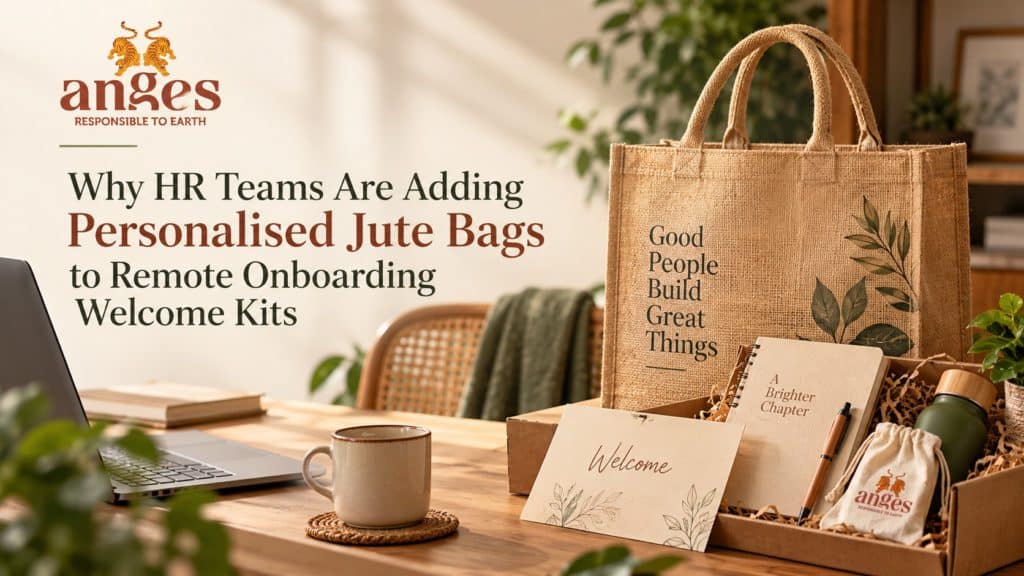
Here’s our position, and you’re free to disagree with it: a welcome kit should be designed for month six, not for the unboxing photo. Pick the one thing you’d like the employee to still be using half a year in, then build everything else around it. For a growing number of HR teams that one thing is a bag, and more specifically personalised jute bags that go to the market, the gym and the metro with your company’s name on the side. We make jute bags, so we’re not neutral. Read the rest with that in mind. We cover what onboarding research does and doesn’t show, how jute compares with cotton and non-woven bags on points your procurement team can check, and the planning slips that make a kit arrive late. When a figure comes from a vendor survey, or when something is just our opinion, we say so. Where Remote Onboarding Falls Short Most onboarding conversations start with Gallup, and for good reason. Only 12% of employees strongly agree their organisation does a great job of onboarding, and new hires usually need about 12 months to reach full performance. Gallup also found that when a manager takes an active part, employees are 3.4 times as likely to call their onboarding exceptional ([Gallup](https://www.gallup.com/workplace/247172/problems-onboarding-program.aspx ). None of that is specific to remote hires. Still, it tells you something useful: the first week is a tiny slice of a year-long ramp, so the real question is whether anything from that week stays around afterwards. Remote seems to make things harder. AIHR’s roundup of recent surveys has remote onboarding scoring below in-person and hybrid on satisfaction ([AIHR](https://aihr.com/blog/employee-onboarding-statistics ). The staffing firm Insight Global asked more than 900 full-time employees and contractors, and 80% said a better onboarding experience would keep them in a job longer ([Insight Global](https://insightglobal.com/blog/employee-onboarding-statistics ). That’s one firm’s sample, so don’t plug it into your attrition forecast. Why a Physical Kit Still Matters When Work Is Digital Here’s the odd thing about a fully remote first week: nothing in it can be held. A kit changes that, but only if it arrives on time. Custom Ink, which sells merchandise, ran its own 2026 onboarding audit. Its numbers: 34% of people who got a kit on day one felt they belonged from the start, against 18% with no kit. A kit that turned up late did about as little as none ([Custom Ink](https://www.customink.com/blog/sustainable-corporate-gifts-guide/ ). It’s a vendor’s survey, so take it as a hint. The dispatch rule it suggests is still sensible, and the sum is simple. Say your courier quotes three working days to the employee’s city, and you want the box there two working days before the start. Dispatch five working days before joining. Do that sum for each city, not once for the whole batch. Our own test for what goes in the box is an opinion, not research. Will the person use it outside working hours in the first month? Notebooks mostly fail. A bag big enough for groceries or gym clothes mostly passes. Packwire sees a similar move away from bulk swag towards fewer things people keep ([Packwire](https://packwire.com/blog/corporate-swag-evolution-welcome-kits ). How Jute Compares, Including Where It Loses Start with the rule change, because it set the direction. India’s ban on identified single-use plastic items took effect on 1 July 2022, with thinner plastic carry bags to be swapped for thicker ones, and coverage at the time listed paper, jute, glass and wood among the alternatives ([AP via Gulf News](https://gulfnews.com/amp/world/asia/india/india-bans-some-single-use-plastic-as-part-of-broader-plan-1.88973371 ). Some employers went beyond the minimum. NTPC, a Maharatna public sector company, banned single-use plastic at its premises and gave employees jute bags for everyday use ([PSU Watch](https://psuwatch.com/national-news/ntpc-bans-single-use-plastic-in-all-its-premises ). A welcome kit in a polybag, or a printed polypropylene tote, sits oddly next to that. Then there’s the fibre. Outlook Business, in a feature quoting the National Jute Board, says jute grows on rainfall without heavy irrigation or synthetic fertiliser, and that the fibre is biodegradable and compostable ([Outlook Business](https://www.outlookbusiness.com/planet/initiatives/jute-indias-golden-fibre-in-the-battle-against-plastic-pollution ). India is the largest producer, so a local-sourcing claim is checkable. Ask where the fibre was spun and woven. None of this makes jute the right pick every time. Here’s what it costs you. Material Breaks down naturally Weight and shipping Printing Main drawback Jute Yes for the fibre; a lamination layer changes how the bag is disposed of Heavier than non-woven, which adds to courier cost on overseas parcels Bold logos in flat colours; the weave limits fine detail Textured surface, weight Cotton canvas Yes Lighter than jute Holds finer and more detailed artwork Conventional cotton needs more water to grow Non-woven polypropylene No, it is plastic-based Light and cheap to ship Prints cleanly Works against plastic-reduction goals Thin polybag No Lightest Limited Usually single use What HR Gets Out of It, and What It Doesn’t Fix A bag won’t repair a poor manager relationship or a muddled first week. What it can do is smaller, and easier to defend. Feeling noticed A generic box tells the employee the company ships boxes. A first name or team name on the bag tells them someone read the joining list. Still, if we had to pick the best-value item in the whole kit, it wouldn’t be the bag. It would be a handwritten note from the new hire’s own manager. Gallup’s finding on manager involvement points that way, and the note costs a pen and five minutes. Employer brand, at street level A mug gets seen on camera. A bag gets seen on the metro by strangers. Whether that turns into referrals, we don’t know, and we haven’t found a study that measures it. Sustainability numbers you can defend The welcome kit is one of the few items HR controls from order to doorstep, so it’s easy to document. Keep the number of bags, the fibre, the supplier and any certificates on file. Then the sustainability report can carry a figure instead of a vague line like “eco-friendly welcome kit”. Custom Ink’s survey found that 69%
Why Boutique Hotels Are Swapping Plastic Welcome Kits for Personalised Jute Bags

A 24-room resort in the Nilgiris changed one thing at check-in last season: the plastic-laminated welcome folder became a printed jute pouch with the guest’s first name stitched on the handle tab. Nothing else about the arrival sequence changed — same key, same fruit basket, same five-minute orientation from the front desk. The property’s manager later told us the bag showed up in more guest Instagram stories that season than the pool did. That’s an anecdote, not a study, but it points at something real: Personalised Jute Bags are doing a job most welcome amenities can’t — they leave the property attached to the guest. Two Trends Converging, Not One Boutique hospitality in 2026 is chasing two things at once. The first is personalization that goes beyond a name on a card — hotel-industry coverage this year has flagged hyper-personalization as the defining shift in how independent properties compete, since they can’t win on room count or loyalty-point scale the way chains do. The second is sustainability that guests can actually see, not just read about in a mission statement on the website. Jute sits at the overlap because it solves both with one object. A property doesn’t need a new CRM system or a redesigned booking flow to hand a guest something personal — it needs a bag with their name on it, made from a fibre that visibly isn’t plastic. What the Guest Data Actually Says The sustainability numbers getting cited across hospitality marketing right now come from a few different surveys, and it’s worth being specific about which is which rather than blending them into one soft statistic. A Booking.com sustainable-travel survey put the share of global travelers wanting to make their trips more sustainable at roughly 84 percent — that’s stated intent, not booking behavior. Separately, a Clean the World survey found 88 percent of travelers say sustainability factors into how they pick a hotel, while just under 59 percent of the same respondents said most hotels do little to act on it in visible ways. That gap between stated preference and what guests actually see on arrival is the part that matters for a welcome amenity — it’s an opening, not a guarantee. On the loyalty side, one hospitality industry report found 74 percent of surveyed travelers said a hotel’s visible sustainability effort improved their opinion of the brand, and the same share said it made them more likely to return. A 2024 study in the Journal of Hospitality and Tourism reached a similar conclusion using different methodology, linking guests’ perception of a hotel as environmentally responsible to repeat bookings and word-of-mouth referrals. Two separate studies landing on comparable conclusions is a reasonable basis for a business decision. It isn’t proof that a jute bag alone moves repeat-booking numbers — no single amenity does that on its own. Why the Material Itself Matters, Not Just the Idea Here’s where most coverage of this topic stops short: it talks about jute as a concept — “eco-friendly,” “natural,” “sustainable” — without addressing what actually separates a welcome bag guests keep from one they leave in the room. Weight is the first variable, and it’s usually skipped entirely. Jute fabric under roughly 280 GSM feels papery and loses shape within a few uses — fine for a one-time gift-shop purchase, wrong for something meant to survive a beach trip and then a flight home. Properties that want the bag reused, not discarded, are better served by 320–400 GSM fabric with a reinforced box-stitch at the handle join, which is the point that fails first on cheaper runs. We see returns and reorder complaints cluster almost entirely around handle failure, not fabric tearing — the handles give out before the body of the bag does. Print method matters more than most hoteliers expect, too. Screen printing sits into the natural weave gaps of jute and ages with the fabric; heat-transfer vinyl sits on top of it and starts lifting at the corners within a season of poolside or beach use, which undercuts the “authentic material” impression the bag was chosen for in the first place. A resort spending on natural fibre and then printing its crest with a method that peels within a month is working against its own decision. One more thing worth saying plainly: jute darkens slightly and develops a soft patina with use and repeated sun exposure. Some properties worry this reads as wear. In our experience supplying hospitality clients, guests tend to read it the opposite way — as a sign the bag actually got used, which is closer to the point than keeping it pristine in a drawer. Material Handle Durability Print Longevity Guest Perception End-of-Life Laminated non-woven Fails within weeks Fades quickly Disposable Landfill Plain cotton canvas Good Good Casual, generic Biodegradable, slow Paper gift bag Poor, single-use Good (one use) Throwaway Recyclable Personalised Jute Bags (320+ GSM, screen print) Strong with reinforced stitching Ages with fabric, doesn’t peel Intentional, premium Fully biodegradable Sizing and Sourcing Decisions That Actually Affect Reuse A small zip pouch handed over with a spa amenity gets used once, at the resort, and then sits in a suitcase. A tote-sized bag, roughly 14×16 inches, doubles as a beach or market bag during the stay itself — which is the version that leaves the property and keeps working as an impression after checkout. Properties chasing brand recall from the amenity, rather than just a nice gesture at check-in, get more from the tote size even though the unit cost is slightly higher. Lead time is the other practical constraint that gets glossed over in trend pieces. A custom run — logo, guest names or initials, colour-matched thread — realistically needs four to six weeks from approved artwork to delivery, longer during October through December when jute mills in West Bengal and Bangladesh are running peak export volume for the holiday season. Properties planning a seasonal relaunch around Diwali or New Year’s need to place that order in August,
Jute Bag Manufacturer Company: Complete Guide to Jute & Cotton Bags in 2026
Plastic is finally losing its grip on the packaging world, and buyers everywhere are on the hunt for something that actually lasts, looks good, and doesn’t leave a mess behind for the next generation. That shift is exactly why more businesses are dropping single use plastic bags in favour of jute and cotton alternatives — and why the search for a dependable jute bag manufacturer company has become so common among retailers, gifting brands, and event planners alike. Jute and cotton bags aren’t a passing trend. They’re sturdy, reusable, and genuinely eco friendly, which makes them a smart long term investment rather than a one time purchase. But not every manufacturer delivers the same quality, and picking the wrong one can mean weak stitching, inconsistent printing, or bags that fall apart after a few uses. This guide walks you through everything you need to know before you place your next order — from the different types of jute bags and cotton bags available, to how you can tell a serious manufacturer apart from a hit or miss supplier. Introduction Consumers today are paying closer attention to what they carry home from the store. Reusable, biodegradable packaging has gone from a “nice to have” to something customers actively look for, and many state and local governments have tightened restrictions on single use plastic bags to speed that shift along. For businesses, this changes the packaging conversation. A shopping bag isn’t just something to carry goods in anymore — it’s a small, walking advertisement for your brand every time a customer steps outside with it. That’s precisely why the manufacturer you choose matters so much. The right partner gives you consistent quality, dependable delivery timelines, and bags that hold up to daily use. The wrong one can quietly damage your brand reputation with every torn handle or faded logo. By the end of this guide, you’ll understand the different jute and cotton bag options on the market, what separates a reliable jute bag manufacturer company from an average one, and how to decide which fabric fits your business needs best. Why Businesses Are Choosing Jute and Cotton Bags in 2026 Sustainability isn’t a marketing checkbox anymore — it’s become part of how customers judge a brand before they even walk through the door. Companies that switch to reusable jute or cotton packaging send a clear, visible signal that they care about more than just the sale. There’s also a practical branding upside. A well printed jute or cotton bag turns into free advertising the moment a customer carries it out in public, at a market, or even years later at the grocery store. Add in growing corporate responsibility commitments and a genuine consumer preference for products that don’t end up in a landfill within a week, and it’s easy to see why so many businesses are rethinking their packaging strategy this year. Benefits of Jute Bags Jute has earned its reputation as one of the toughest natural fibres in the packaging world, and it comes with a few standout advantages: A well made jute bag can genuinely outlast dozens of plastic bags, which is part of why it’s become the go to choice for grocery chains and gifting brands alike. Benefits of Cotton Bags Cotton brings a different set of strengths to the table, and it’s often the preferred pick when a softer, more polished look is the priority: Where jute leans rustic and rugged, cotton leans clean and refined — which is why many businesses end up stocking both. Understanding Different Types of Jute Bags Not all jute bags serve the same purpose. Here’s a breakdown of the main categories you’ll come across while sourcing from a manufacturer. Jute Shopping Bags Jute shopping bags are the workhorse of the lineup — built for grocery stores, retail counters, and everyday errands. They’re designed to handle repeated trips, heavier loads, and daily wear without losing their shape, which makes them a natural replacement for plastic carry bags at checkout counters. Jute Gift Bags When presentation matters, jute gift bags step in. Their natural texture already looks festive, which makes them a favourite for weddings, festivals, and corporate gifting. Many businesses use them as an easy way to elevate a gift box or hamper without extra packaging costs. Jute Beach Bag Spacious, breathable, and sturdy enough to hold a towel, sunscreen, and a change of clothes, the jute beach bag has become a popular seasonal item for travel and vacation brands. Its rugged look also fits naturally into fashion forward summer collections. Custom Jute Bags For brands running promotional campaigns, trade shows, or marketing giveaways, custom jute bags offer a simple way to put a logo directly in front of customers. Since jute takes printing well and photographs nicely on social media, it’s a favourite for brand marketing pushes that need to leave an impression. Personalised Jute Bags Personalised jute bags take customization a step further — think names, initials, or event specific designs. They’re a popular pick for weddings, corporate events, and personalized gifting, where a generic bag just wouldn’t feel special enough. Different Types of Cotton Bags Cotton bags come in a few distinct styles, each suited to a slightly different use case. Cotton Canvas Bag Thick, heavy duty, and built to last, the cotton canvas bag is a favourite for grocery use and premium branding alike. Its sturdy weave holds printed logos crisply, which is why so many fashion and lifestyle brands lean on canvas for their tote bag lines. Cotton Backpack Cotton backpacks bring the same eco friendly material into a more functional, everyday format. They’re commonly used for school, travel, and promotional giveaways, offering a practical alternative to synthetic backpacks for anyone commuting daily. Everyday Cotton Bags These are the flexible, all purpose cotton bags used across retail counters, book fairs, and exhibition giveaways. Lightweight and easy to print on, they’re often the most budget friendly cotton option for bulk orders. How to Choose the Right Jute Bag