
Why Conventional vs. Organic Cotton Bags Impact Water Footprint Calculations in Corporate ESG Reports

Two cotton totes, same size. One is organic cotton from rainfed farms in India. The other is conventional cotton irrigated in Turkey. Use published farm-stage numbers and the organic bag ends up with the bigger total water footprint, while the conventional one drinks about seven times more irrigation water. So which is the lower-water bag? Honestly, it depends on which number you print, and your auditor will ask why you chose that one. This article is about that gap. If your water disclosure covers organic cotton bags bought from a supplier, you’ll see where the usual figures come from, which ones survive assurance and which claims are better dropped. We also get into BRSR Core and Scope 3 style reporting, because that’s where most Indian teams will run into this question. Quick background on us. Anges Bags makes more than 48 million eco-friendly bags a year for customers in over 64 countries, so we see the manufacturing side of this data: fabric weight, panel size, cutting waste. We don’t farm. Where our numbers end and the farm’s begin is covered further down. Cotton water comes in three colours Green, blue and grey. Squashing them into one number is where most of the trouble starts. Green is rain that the soil holds and the plant uses. Blue is water pumped from rivers or underground for irrigation. Grey isn’t water used at all. It’s the clean water you’d need to dilute fertiliser and pesticide runoff down to a safe level. For crops overall, Mekonnen and Hoekstra put the global split at roughly 78 percent green, 12 percent blue and 10 percent grey in their study in Hydrology and Earth System Sciences. Cotton’s behaviour is not like any normal crop. A US industry figure, “Cotton Incorporated”, mentioned a Water Footprint Network range of When the spread is that wide, a single global figure deserves some suspicion.1,500 to 65,000 cubic metres per tonne of cotton In Kuyichi’s water footprint report the field dominates. Ginning is assumed at 40 litres per kilogram of fibre, while the farm stage runs into the thousands. Spinning, weaving and dyeing use water as well, and we’ve left them out of the example below, but for the raw fibre the field is where the volume sits. The study everyone quotes, and who paid for it The comparison you’ll see in most sustainability decks comes from a 2014 Textile Exchange life cycle assessment. Its headline: 91 percent lower blue water consumption for organic cotton, and 46 percent lower global warming potential. The data came from producer groups in India, China, Turkey, Tanzania and the United States. According to the Global Organic Textile Standard summary, GOTS and 13 other Textile Exchange members funded it. That doesn’t make it wrong. It’s just something you should know before leaning on it, and the trade magazine Ecotextile wondered at the time whether the comparisons were really valid. The headline doesn’t matter against two details. The 91 percent is blue water only, not total water. And the same study found that about 95 percent of the water in organic cotton is green, meaning rain. Put simply, the organic advantage in that data is mostly that those farms depend on rainfall instead of pumps. Textile Exchange replaced the old numbers in March 2026 with a new cotton assessment covering nine countries. It points to field emissions from synthetic nitrogen fertiliser as the biggest source of impact in most systems, and says outcomes depend on where the cotton grows and how it’s managed (Textile Exchange announcement). Carbonfact has built the new data into its tools. Its review states that organic cotton doesn’t necessarily use less water than conventional, since geography drives the result, and it admits real uncertainty around organic yields and irrigation. Run the numbers on a real tote Kuyichi’s 2021 water footprint report gives two farm-stage figures we can borrow. Indian organic cotton: the figures are 5,236 litres per kilogram, it is made up of 4,646 green, 320 blue and 270 grey. Conventional cotton from Turkey: 3,020 litres per kilogram, with 470 green, and 2,330 blue and about 220 grey. These came from different studies and research and from different years, so it is not advisable to make it as a ranking of countries. It only shows how differently the mix can fall. Let’s take a plain tote, which needs 100 grams of cotton that includes cutting waste, and you have an order of 100,000 pieces. The weight of the fibre is 10,000 kilograms. Farm stage only: Fibre source Total water Green water Blue water Grey water Organic, India 52.4 million litres 46.5 million litres 3.2 million litres 2.7 million litres Conventional, Turkey 30.2 million litres 4.7 million litres 23.3 million litres 2.2 million litres The organic fibre carries about 1.7 times the total volume but only a seventh of the blue water. Print just the total and you’ll tell procurement the opposite of what a water stress review would. Two other things shift the number, and they rarely get a mention. One is weight.. The amount of cotton is the factor to know the footprint,so a 280 gsm bag holds double the water of an same bag with 148 gsm, whatever fibre it is using. The other is reuse. At 100 grams, the Indian organic figure comes to about 524 litres a bag and the Turkish conventional one to about 302. Over 10 uses that’s roughly 52 or 30 litres each time. Over 100 uses it’s a tenth of that. The number of times someone carries the bag moves the per-use figure tenfold, which dwarfs the 1.7 times gap between these two fibres. Hardly any ESG report records how often a promotional tote gets used. Grey water is where farming methods really split One number which separates organic with conventional farming is the grey water. 700 farms from Gujarat, Maharashtra and Madhya pradesh are compared with three sets of practices as studied by Water Footprint Network. Its conference abstract says that if every farm
Why HR Teams Are Adding Personalised Jute Bags to Remote Onboarding Welcome Kits

Here’s our position, and you’re free to disagree with it: a welcome kit should be designed for month six, not for the unboxing photo. Pick the one thing you’d like the employee to still be using half a year in, then build everything else around it. For a growing number of HR teams that one thing is a bag, and more specifically personalised jute bags that go to the market, the gym and the metro with your company’s name on the side. We make jute bags, so we’re not neutral. Read the rest with that in mind. We cover what onboarding research does and doesn’t show, how jute compares with cotton and non-woven bags on points your procurement team can check, and the planning slips that make a kit arrive late. When a figure comes from a vendor survey, or when something is just our opinion, we say so. Where Remote Onboarding Falls Short Most onboarding conversations start with Gallup, and for good reason. Only 12% of employees strongly agree their organisation does a great job of onboarding, and new hires usually need about 12 months to reach full performance. Gallup also found that when a manager takes an active part, employees are 3.4 times as likely to call their onboarding exceptional ([Gallup](https://www.gallup.com/workplace/247172/problems-onboarding-program.aspx ). None of that is specific to remote hires. Still, it tells you something useful: the first week is a tiny slice of a year-long ramp, so the real question is whether anything from that week stays around afterwards. Remote seems to make things harder. AIHR’s roundup of recent surveys has remote onboarding scoring below in-person and hybrid on satisfaction ([AIHR](https://aihr.com/blog/employee-onboarding-statistics ). The staffing firm Insight Global asked more than 900 full-time employees and contractors, and 80% said a better onboarding experience would keep them in a job longer ([Insight Global](https://insightglobal.com/blog/employee-onboarding-statistics ). That’s one firm’s sample, so don’t plug it into your attrition forecast. Why a Physical Kit Still Matters When Work Is Digital Here’s the odd thing about a fully remote first week: nothing in it can be held. A kit changes that, but only if it arrives on time. Custom Ink, which sells merchandise, ran its own 2026 onboarding audit. Its numbers: 34% of people who got a kit on day one felt they belonged from the start, against 18% with no kit. A kit that turned up late did about as little as none ([Custom Ink](https://www.customink.com/blog/sustainable-corporate-gifts-guide/ ). It’s a vendor’s survey, so take it as a hint. The dispatch rule it suggests is still sensible, and the sum is simple. Say your courier quotes three working days to the employee’s city, and you want the box there two working days before the start. Dispatch five working days before joining. Do that sum for each city, not once for the whole batch. Our own test for what goes in the box is an opinion, not research. Will the person use it outside working hours in the first month? Notebooks mostly fail. A bag big enough for groceries or gym clothes mostly passes. Packwire sees a similar move away from bulk swag towards fewer things people keep ([Packwire](https://packwire.com/blog/corporate-swag-evolution-welcome-kits ). How Jute Compares, Including Where It Loses Start with the rule change, because it set the direction. India’s ban on identified single-use plastic items took effect on 1 July 2022, with thinner plastic carry bags to be swapped for thicker ones, and coverage at the time listed paper, jute, glass and wood among the alternatives ([AP via Gulf News](https://gulfnews.com/amp/world/asia/india/india-bans-some-single-use-plastic-as-part-of-broader-plan-1.88973371 ). Some employers went beyond the minimum. NTPC, a Maharatna public sector company, banned single-use plastic at its premises and gave employees jute bags for everyday use ([PSU Watch](https://psuwatch.com/national-news/ntpc-bans-single-use-plastic-in-all-its-premises ). A welcome kit in a polybag, or a printed polypropylene tote, sits oddly next to that. Then there’s the fibre. Outlook Business, in a feature quoting the National Jute Board, says jute grows on rainfall without heavy irrigation or synthetic fertiliser, and that the fibre is biodegradable and compostable ([Outlook Business](https://www.outlookbusiness.com/planet/initiatives/jute-indias-golden-fibre-in-the-battle-against-plastic-pollution ). India is the largest producer, so a local-sourcing claim is checkable. Ask where the fibre was spun and woven. None of this makes jute the right pick every time. Here’s what it costs you. Material Breaks down naturally Weight and shipping Printing Main drawback Jute Yes for the fibre; a lamination layer changes how the bag is disposed of Heavier than non-woven, which adds to courier cost on overseas parcels Bold logos in flat colours; the weave limits fine detail Textured surface, weight Cotton canvas Yes Lighter than jute Holds finer and more detailed artwork Conventional cotton needs more water to grow Non-woven polypropylene No, it is plastic-based Light and cheap to ship Prints cleanly Works against plastic-reduction goals Thin polybag No Lightest Limited Usually single use What HR Gets Out of It, and What It Doesn’t Fix A bag won’t repair a poor manager relationship or a muddled first week. What it can do is smaller, and easier to defend. Feeling noticed A generic box tells the employee the company ships boxes. A first name or team name on the bag tells them someone read the joining list. Still, if we had to pick the best-value item in the whole kit, it wouldn’t be the bag. It would be a handwritten note from the new hire’s own manager. Gallup’s finding on manager involvement points that way, and the note costs a pen and five minutes. Employer brand, at street level A mug gets seen on camera. A bag gets seen on the metro by strangers. Whether that turns into referrals, we don’t know, and we haven’t found a study that measures it. Sustainability numbers you can defend The welcome kit is one of the few items HR controls from order to doorstep, so it’s easy to document. Keep the number of bags, the fibre, the supplier and any certificates on file. Then the sustainability report can carry a figure instead of a vague line like “eco-friendly welcome kit”. Custom Ink’s survey found that 69%
How a Global Jute Bag Manufacturer Navigates EU PPWR Packaging Compliance for International Importers
Waste generated from packaging throughout the EU have reached approximately 186.5 kgs per person in the year 2022, as reported in European Commission’s own figures and the number is still counting. The EU brought some resolutions like The packaging and Packaging Waste Regulation, Regulation(EU) 2025/40. It started operating in February 2025 and it legally binds all its 27 members from 12th August, 2025 into mutual obligations. It applies in the same way in Berlin, as it did with Lisbon with no scope for a country to create its own more softer version of the same. For an importer, that single fact changes how a supplier conversation should go. Asking “is this eco-friendly?” doesn’t tell you much anymore. What you need to know is who is legally on the hook, what paperwork has to travel with the container, and whether the factory on the other end has actually built compliance into how it works, rather than added a line to a product page. We’ve spent years supplying jute and cotton packaging into Europe as a jute bag manufacturer, and this piece walks through what PPWR means for natural-fibre packaging specifically, not the regulation in the abstract, but the parts that show up on a purchase order. From a Patchwork of National Rules to One EU Regulation Before PPWR, packaging law in the EU ran through a directive from 1994, and directives leave room for national interpretation. Germany’s implementation didn’t line up neatly with France’s. A label that satisfied one customs office could get questioned at another. For a business shipping into three or four EU markets at once, that inconsistency was less a legal footnote than a genuine operational cost. PPWR closes that gap by being a regulation rather than a directive, which means it applies directly and identically in every member state without a transposition step. Manufacturers, importers, distributors, and online marketplaces are reading the same text, and it covers packaging from design through disposal: what it’s made from, how much of it is needed, how it’s labelled, and what happens once it becomes waste. Who Counts as the “Producer” — And Why That’s the Question That Matters Most of the confusion we hear from EU clients isn’t about material specifications. It’s about who is legally responsible for what. PPWR builds its obligations around the idea of a “producer”: whoever first places the packaging on a given national market. If a factory in India ships jute bags directly to an importer’s warehouse in Rotterdam, the importer is usually the one who becomes the producer for that shipment under Article 18, taking on registration, EPR reporting, and volume declarations in the destination country. In Germany, for instance, that means registering in the LUCID register run by the ZSVR; other member states run their own national equivalents. The picture shifts if the overseas manufacturer sells directly to EU consumers, through its own site or a marketplace listing. In that case the manufacturer typically becomes the producer, and Article 17 gives it the option (not, notably, an obligation in every case) to appoint an EU-based Authorised Representative to handle registration and reporting on its behalf. Where the manufacturer sells directly to end users without one, Article 45 and the related provisions of the Waste Framework Directive can make appointing a representative mandatory rather than optional, depending on the sales channel. A few duties don’t move regardless of who holds “producer” status: We put these responsibilities in writing with every EU client before the first container leaves the factory. Sorting it out on a customs query is a far worse time to discover a gap. Roles and Responsibilities at a Glance Role Core Responsibility Relevant Provision Manufacturer Design compliance, substance restrictions, technical file, Declaration of Conformity Articles 5–12 EU Importer Verifies manufacturer documentation, often registers as producer, EPR reporting Article 18 Authorised Representative Registration and reporting for non-EU producers selling direct to consumers Article 17 / Article 45 Distributor Confirms upstream compliance before making packaging available Article 19 Where Jute Already Meets the Bar, and Where It Doesn’t Most PPWR explainers are written with plastics manufacturers in mind, and natural fibre gets a paragraph near the end, almost as an afterthought. That framing has it backwards. Jute wasn’t redesigned to satisfy a circular economy regulation; it has been circular packaging since long before the term existed. It’s plant-based, compostable at end of life, and absorbs more carbon across its growing cycle than it releases in processing. As it is not plastic, it avoided two strictest plastic centric obligations in this regulation., it is to use minimum usage of plastics or reusable plastic to minimum for plastic packaging and PFAS restrictions apply mostly to food contact plastic packages from August 2026. That head start doesn’t mean the material is waved through. PPWR applies by function, not by material, so a jute bag still has to satisfy the general rules on substances of concern, packaging minimisation, and, once the relevant implementing acts are finalised, the harmonised labelling requirements expected from around August 2028. Those labels will need to show material composition and correct disposal method using standardised EU pictograms, and reusable packaging entering a formal reuse system will need its own reusability mark, sometimes with a QR code linking to collection information. The mistake we see most often isn’t ignorance of the regulation. It’s a supplier telling a buyer “it’s natural, so it’s compliant” and the buyer taking that at face value. Jute usually clears the substance and design requirements without much friction, dyes and coatings being the main exception worth checking closely, but “usually easier” and “documented” are two different things, and only one of them holds up under an audit. The Paper Trail an Importer Should Ask For A shipment either clears smoothly or sits in a bonded warehouse waiting on someone to produce a document that should have existed from day one. From a jute bag manufacturer that has actually built PPWR into its production process, an EU importer should expect to
Jute Bag Manufacturer & Shopping Bags Manufacturer for Corporate and Decorative Jute Bags
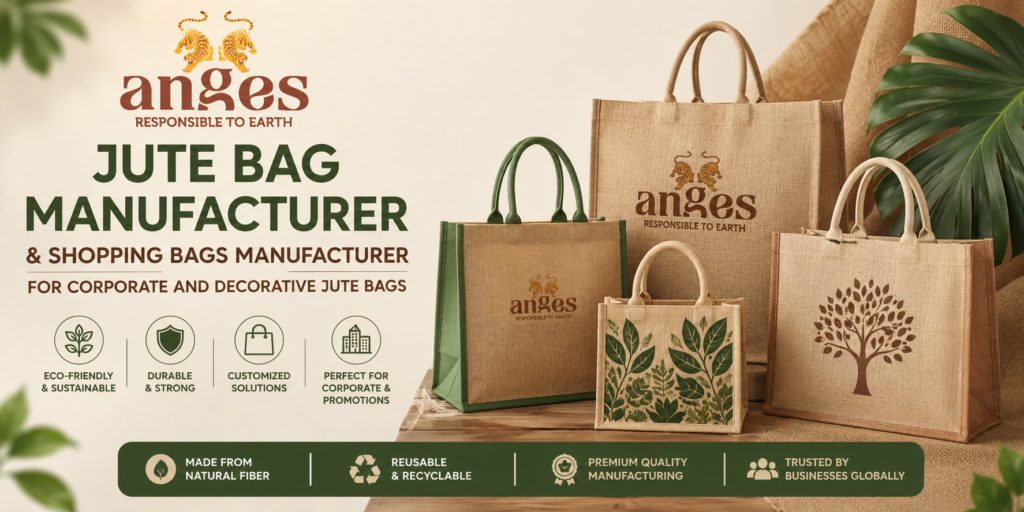
If you’re a business owner, retailer, or procurement manager searching for a dependable jute bag manufacturer, you already know the struggle. Generic ready made bags rarely fit your brand, your budget, or your bulk order timelines. What most businesses actually need is a manufacturing partner who can produce jute bags to their exact specifications, at scale, with consistent quality every single time. This guide walks you through everything you need to know before placing an order with a jute bag manufacturer company — from what to look for, to the types of bags available, to how the ordering process actually works. Why Choose a Professional Jute Bag Manufacturer? There’s a big difference between picking up a handful of jute bags from a local wholesaler and working with an actual jute bag manufacturer. When you buy off the shelf, you’re stuck with whatever size, colour, and finish is already on the shelf. There’s no room to add your logo properly, no consistency across bulk quantities, and often no accountability if the quality drops halfway through your order. A professional manufacturer works differently. They control the process from raw material selection to final packaging, which means: For businesses, exporters, retailers, and event organizers, this control over the manufacturing process is what actually protects your brand image and your budget. What Makes a Reliable Jute Bag Manufacturer Company? Not every manufacturer that claims to make jute bags is equipped to handle serious B2B orders. Before you commit, it helps to know what separates a dependable jute bag manufacturer company from one that will leave you with delayed deliveries and inconsistent quality. Here’s a practical checklist to evaluate any manufacturer you’re considering: Running through this list before you place an order saves you from costly reprints, missed deadlines, and brand inconsistency later. Custom Jute Shopping Bags for Retail and Business Use If you run a store, boutique, supermarket, or exhibition stall, your shopping bags are doing more marketing work than most people realize. Every customer who walks out with your bag is carrying your brand through the street, literally. A capable shopping bags manufacturer can build jute shopping bags around your actual retail needs: Retailers who invest in well made, properly branded jute shopping bags often find they double as free advertising — customers reuse them for groceries, travel, or daily errands, which keeps your brand visible long after the sale is made. Corporate Jute Bags Manufacturer for Branded Business Requirements Corporate buyers have a different set of priorities than retail buyers — consistency, professional finishing, and brand accuracy usually matter more than anything else. A dependable corporate jute bags manufacturer understands this and builds accordingly. Corporate jute bags are commonly used for: For all of these use cases, the details matter more than they might seem to. Logo placement needs to be precise and legible. Brand colours need to be matched accurately, not approximated. Finishing needs to look premium enough to represent the company, not like an afterthought gift. And most importantly, quality has to be consistent whether the order is for 200 bags or 20,000 — because a corporate gift that falls apart undermines the exact impression the business was trying to create. Decorative Jute Bags Manufacturer for Gifting and Special Occasions Jute isn’t just functional — in the right hands, it becomes genuinely decorative. A skilled decorative jute bags manufacturer can turn a plain jute bag into something that feels premium enough for gifting, without straying from what a manufacturer can realistically and consistently produce at scale. Decorative jute bags are commonly used for: Customization options for decorative bags typically include prints and patterns, embellishments like ribbons or tassels, coloured linings, embroidered detailing, and premium finishing touches — all of which can be adjusted based on the occasion and the budget, while keeping the manufacturing process practical and repeatable. Types of Jute Bags a Manufacturer Can Produce Before placing an order, it helps to know the general categories a manufacturer typically works with. This gives you a clearer starting point when describing your requirement. Jute Shopping Bags Built for everyday retail and grocery use. These focus on functionality — sturdy handles, reasonable load capacity, and a size that’s easy to carry. Branding is usually simple and clean. Corporate and Promotional Jute Bags Designed with brand consistency in mind. These are built for events, conferences, and campaigns where the bag represents the company, so finishing and print accuracy are prioritized. Decorative and Gift Jute Bags Focused on appearance and presentation. These bags are used where the “unboxing” or gifting moment matters as much as the bag’s function. Custom Printed Jute Bags Centered around branding and personalization — logo printing, custom artwork, and specific colour matching across any of the categories above. Customization Options Available from a Jute Bag Manufacturer One of the biggest advantages of working with a manufacturer instead of a wholesaler is the level of customization available. Here’s what buyers can typically adjust: A corporate buyer ordering bags for a conference will prioritize different combinations of these than a boutique ordering decorative gift bags — which is exactly why customization matters more than picking from a fixed catalog. How to Choose the Right Jute Bag for Your Business With so many options available, it helps to narrow things down using a few practical questions: Working through these questions before reaching out to a manufacturer makes the entire ordering process faster and more accurate. What to Ask Before Ordering from a Jute Bag Manufacturer Before you place your order, it’s worth asking the manufacturer these direct questions to avoid surprises later: Getting clear answers here upfront prevents miscommunication and protects your launch or event timeline. Why Businesses Prefer Custom Jute Bags for Branding Beyond sustainability, there’s a practical business case for choosing custom jute bags over generic packaging or plastic alternatives: For businesses trying to build recognition without a heavy ad spend, custom jute bags are a low cost, long lasting way to stay visible. How to Place a Bulk
From Seed to Stitch The Real Journey of Our Organic Cotton Bags
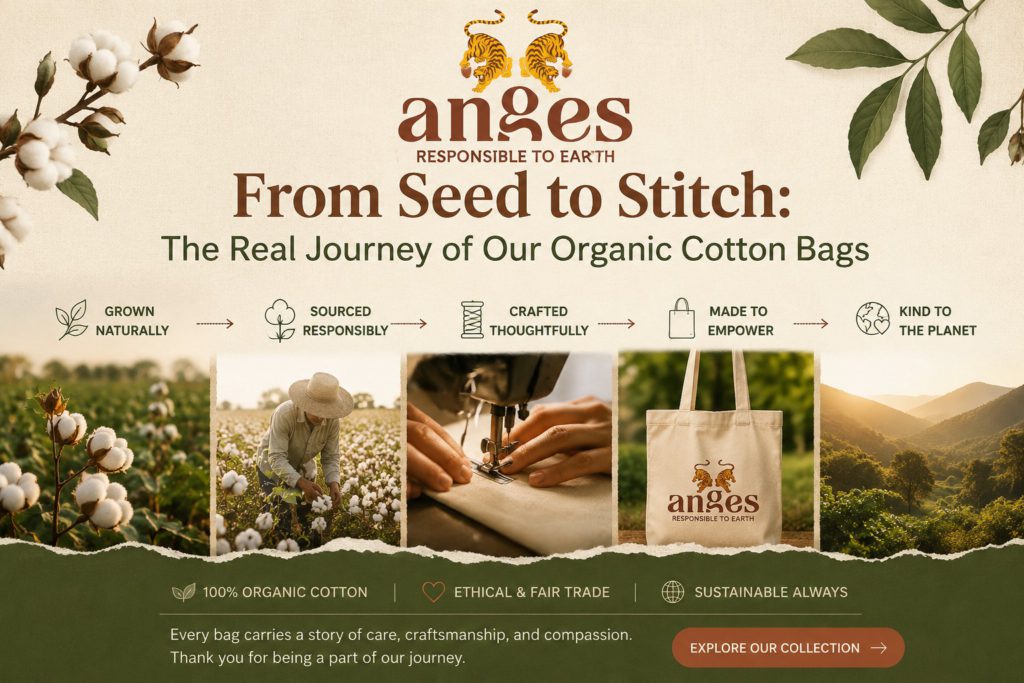
Organic Cotton Bags, funny things really. We all use them. Everywhere. Constantly. But honestly? When’s the last time you actually thought about where yours came from? I didn’t either. Not until I got into this business. That was over twenty years back now. And once you’ve seen the whole thing as a seed becoming something you hold in your hands, it stays with you. Changes how you look at things. It really does. This isn’t going to be one of those polished corporate things. No marketing speak. Just the proper story behind an organic cotton bag. Where it starts. The journey it takes. What it all means. A farmer called Ajit I was in Maharashtra some years ago. Cotton country. Early morning, beautiful light, everything quiet. Went to see one of our farmers. Older fella, name of Ajit. Been doing organic cotton for over thirty years.He didn’t try to impress me with charts or presentations. Just knelt down in his field. Scooped up some dark earth. Hold it out. *”Smell,”* he said. So I did. And I know this sounds odd, but it smelled different. Alive. Rich. Like rain and soil and none of that chemical stuff you get on conventional farms. *”This land,”* he told me, *”has fed my people since my grandfather’s time. I’d never poison it. Not for anything.”* That got me. Still does.Organic farming isn’t easy. It’s tough. Slow. It takes patience. Farmers use compost, not synthetic stuff. They plant other crops next to the cotton keeps the soil happy. Bring in good insects to manage the pests. Rotate fields to let the land rest. It’s all about respect. For the earth. For the future. For those who come after. And here’s the thing: it works. Organic cotton uses something like ninety percent less water than the conventional kind. Cuts greenhouse gases by about half. Keeps nasty chemicals out of our rivers and soil. There’s actual research on this, a sixteen-year study from the Research Institute of Organic Agriculture (FiBL) showed organic farms can yield almost as much cotton as conventional ones. Without wrecking the environment. So that organic cotton bag you’re carrying? That’s not just a product. That’s Ajit’s life’s work. Thousands of litres of saved water. A choice that genuinely means something. What happens after harvest When the cotton’s ready, they pick it by hand. Not because it’s picturesque or whatever machines just damage the fibres. Makes the yarn weaker. So our farmers take their time. Do it right. Preserve the quality. Then comes ginning. That’s separating the fluffy cotton from the seeds. And this is where we get proper strict. Every batch gets tracked. Every bale has to be certified organic. If it’s not? Doesn’t get anywhere near our factory. End of. From there, the cotton goes off to spinning mills. Gets carded, combed, twisted into yarn. Most people don’t realise how much this matters, the quality here decides whether your bag lasts for years or falls apart in months. We only work with mills that know organic fibres. That treat them properly. No cutting corners. Then the yarn gets woven into fabric. Different weaves for different purposes. Tighter for heavy stuff. Looser for everyday use. Our team spends ages figuring out what works best for each bag. The workshop, my favourite bit This part I love. The Kolkata workshop. Where fabric becomes an actual bag. Designers sketching, cutters laying out material, master tailors—some with us over a decade—guiding everything through the machines. I watched Meera work the other week. Twelve years she’s been with us. She showed me how she reinforces handles with double-stitching. *”Most brands skip this,”* she said, running her fingers along the seam. *”We never do. Never have.”* And she’s right. Our organic cotton bags aren’t churned out by machines somewhere anonymous. Real people make them. People who take pride in what they do. Who check every single seam. Every handle. Every tiny detail. We’re carbon-zero too. Offset all our energy use. Not because it looks good. Because it’s the right thing. Simple as. People are finally getting it The organic cotton market hit over two billion in 2025. Experts reckon it’ll cross fifty billion by 2034. Over a hundred major fashion brands have pledged to switch to sustainable cotton. But what’s really driving this? Ordinary people. Folk who pause before grabbing plastic and wonder if there’s a better way. That’s why our cotton bags exist. Because enough people asked. We’ve been at this since 2003. Ship to over sixty countries. Over forty-eight million bags a year. But honestly? None of that matters as much as knowing we’ve always done things right. Faqs Is organic cotton actually better? Way better. Less water, way fewer emissions, no toxic chemicals. Not even close. You certify your cotton? Yes. GOTS standards. Full traceability. How long does a bag last? Years, with decent care. Built to last. Custom orders? Printing, embroidery, custom sizing, we do it. Just contact us through the site. Where can I see what you’ve got? Right here: (https://www.angesbags.com/ ) If you’ve read all this, thank you. Means you actually care. And honestly, that matters. Next time you grab an organic cotton bag, pause. Think about the seed. The farmer. The spinner. The weaver. The tailor. All those hours. All that work. It’s not just a bag. It’s something better. By the Product Development Team, Anges BagWe’re the Product Development Team at Anges Bags. Textile engineering, sustainable sourcing, quality assurance, that’s us. We visit farms. Inspect production lines. Test our bags ourselves. Every single organic cotton bag we make has been through someone’s hands on our team. Not because we have to. Because we genuinely care about what we put out therePublished: July 3, 2026
Wholesale Trends: What’s New at Your Local Shopping Bags Manufacturer
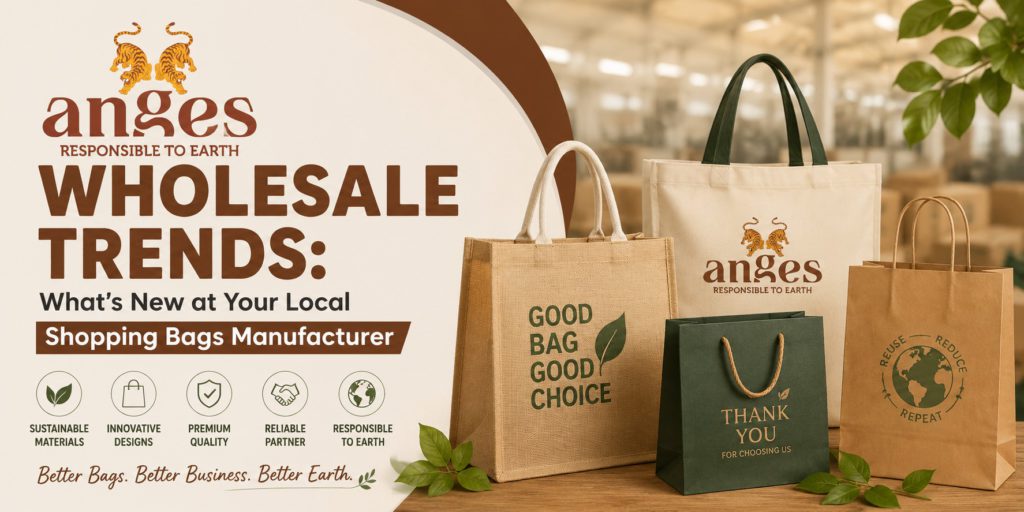
Been doing this for two decades. That still feels strange to say, but here we are. When I started, I didn’t care about bags. Not one bit. Honestly, I don’t think anybody did. You grabbed the cheapest thing off the shelf, slapped a sticker on it maybe, and handed it over. The whole conversation was done before the coffee got cold. Somewhere along the way, that changed on me. I’m not even sure I noticed it happening. Maybe it crept in slowly, I don’t know. But these days I catch myself doing this weird thing. I’ll be walking down a street, someone will step out of a shop carrying a purchase, and my eyes go straight to the bag. Every time. The material, the way the handle sits, whether it’s got some character or it’s just another beige blob. Old habits die hard I guess. So if you’re buying in bulk, if you’re out there trying to find carriers that actually do something for your brand, I want to talk about what matters. Not the stuff you read in glossy catalogs. The real stuff. The stuff I’ve seen happen in actual shops, with actual customers, when nobody was taking notes. Right now, the interesting work is happening inside a shopping bags manufacturer that actually thinks about what they’re making. Let’s get into it. The Customer Who Smelled a Bag and What That Told Me I saw this happen. A few years ago, I was killing time in a little boutique, the kind that sells handmade soaps and candles. The owner, nice woman, had recently ditched her old shiny plastic carriers for these thick, uncoated kraft paper bags she’d found through a local supplier. A lady bought a lavender candle, and as she took the bag she did something I almost missed. She brought it up to her face, just for a beat, and breathed in. No big reaction. Just a tiny, quiet smile. The paper had that earthy, woody smell. It matched the whole vibe of the candle, the shop, everything. I stood there thinking, well, that’s it. That’s the whole thing right there, summed up in one unguarded second. The material of a bag can do that. It can make someone feel something before they’ve even left the counter. That’s not marketing jargon. I watched it happen. Most bulk carriers used to be chosen strictly by price. Now, the conversation inside a decent production facility is about fabric libraries—organic cotton, jute with a bit of rough texture, rPET felt that comes from old plastic bottles but feels surprisingly soft. Anges Bags, as a team that’s been paying attention, has built their whole range around this shift. They know a bag’s material is already telling a story, whether the retailer planned one or not. Why I Still Think About That Broken Handle in a Parking Lot Another memory, less pleasant. I was walking through a grocery store car park. A man ahead of me, arms full, paper bag just… gave up. Bottom tore clean open. A jar of pasta sauce smashed, red everywhere, on his shoes, on the asphalt. He didn’t scream or anything. He just stood there for a second and then muttered the store’s name under his breath, in that tired, angry tone people get when a small thing ruins their whole afternoon. That store probably never knew it happened. But that guy remembered. I bet he still does, somewhere in the back of his head. That’s the thing about bag failure. It’s not just a mess. It’s a tiny betrayal. It attaches itself to a brand name. I’ve noticed, since then, a real hunger for bulk carriers that feel almost stubbornly strong. Double-stitched handles. Bottoms that are cross-reinforced. Gussets that actually expand, properly, without tearing like wet newspaper. When the people making your bags care about these things, you can feel it the second you pick up a sample. They’ll hand it to you and say, “Go ahead, pull on it. Really yank.” And you do, and it doesn’t budge. That’s the sign. Beyond avoiding disaster, a bag that holds up becomes a reusable tote. It ends up in someone’s car, hauling gym clothes or library books or beach towels, your logo riding along for weeks or months. I can’t think of a lazier, more effective bit of advertising. Making a Bag That Feels Like Yours, Without the Old Headaches The way custom printing used to work, I honestly dreaded those conversations. You needed to order a shipping container’s worth. One color, your logo slapped in the dead center. Small, quirky shops had no real option. It was boring and it was rigid. That whole world got dismantled. Digital printing snuck in and changed the rules. These days, I’ve watched a tiny patisserie work with their supplier to get a watercolor floral print that wraps all the way around, stem to stem. A bookshop did a subtle blind emboss of a line from a poem, something you only see when the light catches it sideways. I love stuff like that. I’ve also become unreasonably fond of contrasting handle colors—bright mustard on kraft brown, deep navy on off-white cotton. It’s such a small tweak, barely takes a minute to decide, but it makes a bag feel deliberate. Anges Bags, having handled this day in and day out, can guide a business through these choices without making it feel like a big production. A little creative conversation can flip a disposable item into something a customer wants to keep. That’s the goal, isn’t it? The Local Manufacturer Thing That Saved a Few of My Sanities I’ve taken panicked calls. Usually around October. November, it gets worse. A shop owner’s holiday bags are drifting somewhere on a cargo vessel, or they arrived and the color is wrong—not fresh sage, more like sad swamp—and there’s zero time left to fix it. The big global supply chain works, right up until it doesn’t. When it stumbles, it leaves a mess in
Heavy-Duty and Eco-Friendly: The Engineering of a Shopping Bags Manufacturer

A shopping bag is something which helps the customer carry their purchased goods. It leaves the store in plain view. It is held by the handles, set down on car seats, folded into cupboards, and, if it is made well, used again and again. In a quiet way, it continues the conversation between a brand and its customer long after the bill has been paid. That may seem like a modest role for something so ordinary. Yet anyone who has had a bag split open on the way home understands how quickly a small detail can colour the entire experience. For this reason, many businesses no longer treat bags as a routine procurement item. They look for a Shopping Bags Manufacturer that understands not only printing and production, but also the mechanics of durability and the practical demands of modern packaging. Anges Bags has built its business around precisely that understanding. A Well made Shopping Bag and its Utility Beyond Purchasing Packaging in the retail sector saw some planned progress in recent years. Customers notice whether a bag feels substantial. They notice whether it can be used again. They notice, too, when a business chooses materials that appear less wasteful and more considered. In other words, the shopping bag has become part of the product experience. A well-made bag suggests care. It tells the customer, quietly but clearly, that the business has paid attention to the details. That is one reason so many retailers now invest in bags that are designed to last rather than bags intended to be discarded immediately. How Shopping Bags Are Made The manufacturing process begins with a practical question: what must the bag do? A grocery retailer may need a bag capable of carrying heavier loads. A clothing store may want a bag which carries its brand tone or have a good look into it as a corporate client may need reusable bags for their events and to use them in promotional campaigns. As soon as the usage understanding comes in the technical decision can be made. The Choice of Right Material There are a range of materials used to manufacture bags by Anges bags. They may include non-woven and woven polypropylene, cotton and jute. Each material has its own strength to make good quality shopping bags for a distinctive user base. Polypropylene has excellent durable quality, cotton and jute bags are highly in demand for its natural and reuse quality. The bags are manufactured keeping in mind how and where they will be used and how it need to look along with how much time it will be in use. Designing the Structure The design of a shopping bag differs as per their needs. It is a simple load bearing product. The gusset depth, dimensions, handle placement and bottom construction all are inter related with the weight it can distribute while in use. A bit of change in handle or the change in width at the base can influence the performance of the bag. Printing and Assembly After the approval of the design, the material is cut, printed and assembled along with proper alignment of the handles to make the bag workable. Each batch is inspected for its proper functionality. At Anges, these stages of manufacturing are managed with a proper understanding that a product must meet its proper functionality before it can represent a brand properly. What Makes a Bag Strong?. A thicker material does not ensure a strong and durable bag. It is effective with the combination of perfect material, perfect construction and nice finishing. A bag which are designed for heavy lifting, is generally consists of reinforced handles, a stable support at the bottom, and can withstand repeated stress. When these considerations are followed the bag usually feels dependable for the customers. Sustainability in Practicality Eco friendly packaging is a choice which is considered very seriously. When it comes to to manufacturing the choice of materials are pretty straight. It must be reusable or recyclable as much as possible. Wastage should be very low, and printing should use eco-friendly materials. Anges Bags manufacture bags made from jute, cotton and reusable polypropylene, which give companies an option to stay away from one time use packaging. The production adopted practices which provide use of the materials more efficiently with low waste of materials. As per United Nations Environment Programme, it is global concern to reduce plastic use and using reusable packaging is the most practical decision businesses can take. The Market position of Anges Bags Anges Bags is a trusted manufacturing partner for retailers, wholesalers and corporate houses who need custom shopping bags. Anges provide a huge range of products , which includes non-woven carry bags, cotton totes and jute bags. Clients want to have the ability to customize their own bags, choose their own colour, handle style and print designs according to their requirements. .Along with this, they know the end product will have the consistency and attention to details to meet their niche requirement. That combination of flexibility and manufacturing discipline has helped Anges Bags earn a solid reputation as a dependable Shopping Bags Manufacturer. Final Thoughts The best shopping bags are seldom the ones that draw attention to themselves. They simply perform well. They carry the purchase securely, present the brand neatly, and remain useful long after the original transaction. That kind of reliability is the result of thoughtful design and disciplined manufacturing. By combining durable materials, careful construction, and environmentally responsible options, Anges Bags produces shopping bags that meet the practical needs of businesses and the changing expectations of their customers.
Designing the Perfect Tote: from POV of a Shopping Bags Manufacturer
A tote bag is easy to overlook. It does its work quietly—picked up, filled, carried along, then folded away somewhere out of sight. Yet, for those who make them, nothing about it is accidental. A Shopping Bags Manufacturer spends more time on what most people would consider minor details than on anything that looks obviously “designed.” At Anges Bags, the early conversations are rarely about colour or print. They tend to circle around use. Who is likely to carry the bag? For how long? Will it hold groceries, garments, or something heavier? These answers begin to narrow down what the bag needs to be, long before it takes shape. Starting With How It Will Be Used There is a practical rhythm to designing a tote. The base, for instance, cannot be an afterthought. A slightly wider bottom changes how the bag stands when set down. Too narrow, and it collapses in on itself. Too wide, and it loses proportion. Handles follow a similar logic. A short handle works well for quick errands but becomes inconvenient over longer distances. A longer one sits comfortably on the shoulder but needs stronger reinforcement at the joints. Materials, naturally, sit at the centre of these decisions. Cotton canvas is dependable and familiar. Jute offers structure but can feel stiff if not handled carefully. Non-woven fabric keeps costs manageable, though it asks for precise stitching to avoid early wear. A Shopping Bags Manufacturer does not treat these as interchangeable choices. Each one sets its own limits. Material Choices and the Present Climate The last few years have altered how materials are discussed. Buyers are no longer satisfied with appearance alone. There is more attention on origin, lifespan, and disposal. Jute, once considered old-fashioned, has returned with a different standing. It fits easily into conversations around sustainability. Recycled fabrics are also being used more often, though they introduce small variations—slight differences in tone or texture that cannot always be controlled. Rather than correcting these differences entirely, many manufacturers now work around them. It requires a bit of flexibility in design, but it also produces something that feels less uniform, and in some cases, more honest. Branding That Travels Quietly A tote bag carries more than its contents. It carries a name, often without trying too hard. Once it leaves the store, it moves through everyday spaces—markets, offices, public transport—without any further effort from the brand. Because of this, branding has taken a quieter turn. There is less crowding of elements now. A single, well-placed mark often does more than a busy layout. It also tends to last longer without looking worn out. Printing methods are chosen with similar care. Screen printing remains a steady choice for larger runs. Digital printing allows finer detail, though it asks for closer control during production. Designing for More Than One Use There was a time when tote bags were treated as temporary. That has changed. Many people now keep them, reuse them, and sometimes rely on them for daily errands. This shift has made durability less negotiable. Handles are reinforced with extra stitching. Seams are tested for repeated stress, not just immediate load. Even thread quality comes into focus. A Shopping Bags Manufacturer is, in effect, designing for repetition—for the second use, the tenth, the hundredth. When the Design Meets Production Not every idea survives the move from paper to production. Some details slow down the process. Others introduce inconsistencies when produced in bulk. This is where experience shows. Small changes—an adjusted seam, a different fold, a simplified print—often make a design more workable without changing its intent. At Anges Bags, these adjustments are expected. They are part of getting the design to sit comfortably within real production conditions. Closing Thought The tote bag has settled into a role that goes beyond convenience. It reflects habits, expectations, and, to some extent, values. For a Shopping Bags Manufacturer, the goal is not to create something that draws immediate attention, but something that stays in use without effort. When a bag becomes part of someone’s routine—used without much thought—it has reached a kind of quiet success.
How to Maintain and Reuse Printed Jute Bags So They Look New for Years

A jute bag does not collapse overnight. It gives small signals first. The bottom softens slightly. The sides lean inward. The print loses a touch of sharpness. None of this is dramatic, which is why it often goes unnoticed until the bag looks older than it is. With printed jute bags, longevity depends less on repair and more on interruption—interrupting the habits that cause gradual decline. Jute is tough, but it is not indestructible. It tolerates weight well. It tolerates water poorly. It responds to patience. It resists force. Keep Water Brief, Not Absent Jute cannot be kept entirely away from moisture. That is unrealistic. What matters is duration. Fibres get weakened and shapes become mismatched due to long exposure to dampness. If the bag gets wet, empty it immediately. Stand it upright. Let air pass through it. Avoid hairdryers or heaters. Fast drying can tighten fibers unevenly and affect printed areas. Sunlight should be limited. A short exposure is fine; extended exposure fades ink gradually, often unevenly. Shade with airflow is better than direct heat. Clean With Restraint A spotless bag is not always a healthy bag. Over-cleaning does more damage than light marks ever will. Machine washing is not recommended. Even a gentle cycle strains stitching and disturbs print layers. Instead, isolate the stain. Dampen a cloth lightly. Press against the area. Lift, do not rub. If the mark remains faintly visible, consider leaving it. Slight wear reads as use, not neglect. When caring for printed jute bags, the printed section deserves less contact than the rest of the fabric. Ink sits on the surface; friction works against it. Let the Bag Rest Constant pressure reshapes jute. If the bag is used daily, give it occasional breaks. Alternating between two bags reduces stress on seams and handles. Handles, in particular, reveal age quickly. They bear concentrated tension. Avoid carrying more than the structure was designed to hold. Jute stretches slightly under load. Repeated overloading makes that stretch permanent. Rest restores alignment. It is a simple principle, though rarely practiced. Store With Intention Improper storage does quiet damage. Folding sharply across printed panels encourages cracking. Compressing the bag beneath heavier items encourages distortion. Instead, store it upright or loosely filled with paper. Maintain gentle structure. Keep it in a dry, breathable area. Avoid sealed plastic boxes where humidity can accumulate invisibly. Shape is easier to preserve than to rebuild. Limit Friction, Inside and Out Printed surfaces fade more from abrasion than from age. Dragging the bag across pavement, brushing it repeatedly against textured walls, or placing it under coarse surfaces accelerates wear. Inside the bag, sharp corners and metal edges can press outward, weakening the print from beneath. Use small pouches when carrying hard objects. Even thin lining can reduce direct contact with the jute weave. Over time, prints soften. That is natural. Cracking, however, usually points to friction rather than time. Reuse With Adjustment A bag used for light shopping may not respond well to heavy commuting loads. If its purpose shifts, adjust how it is packed. Liquids should be sealed. Foods that leave residue should be wrapped. Powdered items should never rest directly against the fiber. Before storing the bag for weeks or months, wipe it lightly and ensure complete dryness. Even mild residual moisture can alter the feel of the weave. What Preservation Really Means The goal is not to freeze the bag in its original state. Jute changes with use. The weave softens slightly. The color may mellow. These shifts are not flaws. With steady care, printed jute bags retain clarity and structure well beyond their expected lifespan. The base remains firm. The print remains readable. The handles maintain proportion. Longevity rarely comes from heavy intervention. It comes from small decisions made consistently—less washing, less weight, less friction. Attention early prevents correction later. Over years, that restraint keeps the bag looking considered rather than worn out.
Best Use-Cases for Cotton Bags Work, Travel, Shopping, and Brand Promotions

Cotton bags are often discussed as an ethical substitute. Their real strength becomes evident only over time, as they move repeatedly through work routines, travel patterns, shopping habits, and brand-led distribution without losing relevance. In the bag industry, material conversations tend to stop at composition. Fabric weight, weave, finish, and certification dominate the discussion. What is rarely examined is what happens after a bag enters everyday life—when it is no longer handled carefully or used as intended. A bag’s value is not tested at purchase. It is tested months later, when it has been overloaded, folded awkwardly, washed without instruction, and reused out of convenience rather than intent. Many materials fail quietly at this stage. Cotton does not. It adjusts. That adjustment is gradual and forgiving. Cotton neither preserves a pristine form nor collapses under strain. It settles into use. This quality, often overlooked, explains why cotton bags remain present in daily circulation even as alternatives cycle in and out of relevance. Work Use-Cases: Designed for Shifting Professional Life Work no longer happens in a single place or posture. Offices blur into shared spaces, commutes stretch into work hours, and formality fluctuates throughout the day. Bags that are too polished or too technical tend to feel misplaced as these transitions accumulate. Cotton bags handle this ambiguity well. They carry daily essentials without imposing an identity. They do not suggest hierarchy or casualness too strongly in either direction. As their surface changes over time, the change reads as use rather than decline. This allows the bag to remain appropriate even as work contexts evolve. There is also a behavioral advantage. Cotton does not demand care. When an object does not require protection, it is more likely to be used consistently. Over time, that consistency determines which bags stay in rotation. Travel Use-Cases: Reliability in Uncontrolled Conditions Travel exposes design exaggeration quickly. Rigid forms become inconvenient. Coated surfaces show wear early. Features that promise efficiency often require careful handling to function as intended. Cotton bags succeed by avoiding these traps. They are not designed to impress under inspection, but to perform under indifference. They fold when space tightens, expand when plans change, and recover without visible penalty. This makes them especially effective for short trips, daily transit, and secondary luggage roles. Travelers tend to rely on what tolerates inconsistency. Cotton earns that trust through repetition rather than performance claims. Shopping Use-Cases: When Reuse Becomes Automatic Shopping behavior is driven by immediacy. Bags are reused not because people plan to reuse them, but because they are already there. Cotton bags remain accessible because they store easily, carry comfortably, and withstand repeated loading without structural fatigue. Over time, cotton bags stop being framed as reusable options and start functioning as defaults. This transition is subtle but decisive. Once a bag reaches this stage, reuse becomes automatic. The bag no longer represents a choice. It represents convenience. This is why cotton continues to appear in everyday settings long after novelty materials lose traction. Brand Promotions: Exposure That Accumulates Quietly Promotional bags often prioritize visibility over longevity. When the material feels temporary, the brand message disappears along with the bag. Cotton supports a slower, more durable form of exposure. A well-made cotton promotional bag integrates into routine. It shows up repeatedly, not because it demands attention, but because it remains useful. Brand visibility builds through frequency and familiarity rather than emphasis. Manufacturers aligned with this thinking design cotton bags for endurance instead of immediacy. This perspective is evident in how Anges approaches cotton—as a material chosen for its long-term behavior rather than short-term appeal. Closing Thought The staying power of cotton bags has little to do with trend cycles or messaging strategies. It rests on their ability to absorb everyday use without protest. Objects that ask less of the user tend to last longer. In that sense, cotton bags succeed not by standing apart, but by becoming part of routine.